

A sudden health problem can leave anyone asking the same question: Should I go to a hospital emergency department, visit a doctor, or wait and see if the symptoms improve?
Knowing the difference between an Emergency vs urgent care in India problem can help you make a faster and safer decision. Some conditions need immediate medical attention, while others may require prompt evaluation but do not necessarily need emergency treatment.
For families in Ghaziabad and nearby areas, having access to dependable emergency medical care is especially important when symptoms develop unexpectedly, an injury occurs, or a person’s condition changes rapidly.
Need Immediate Medical Attention?
When a medical condition appears serious, rapidly worsens, or could potentially threaten life or cause permanent harm, do not delay seeking professional medical help.
SR Hospital – Emergency Care in Ghaziabad
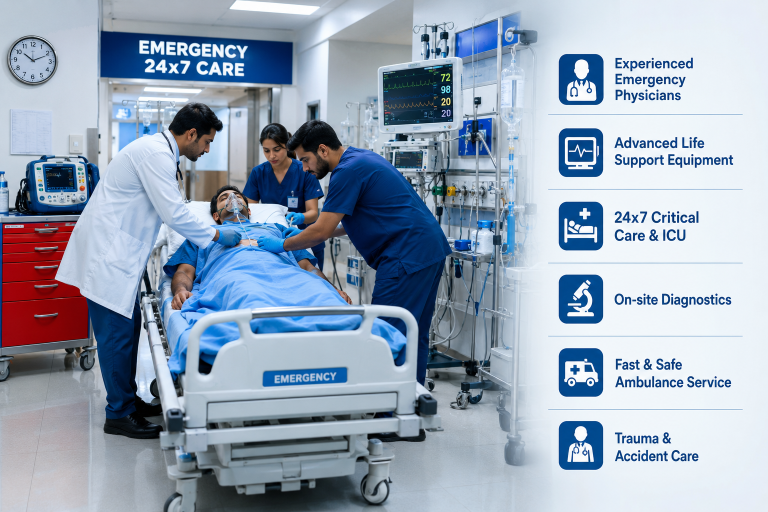
When every minute matters, timely medical assessment can make a significant difference. SR Hospital provides emergency medical support for patients requiring prompt evaluation and treatment.
Don’t wait for symptoms to become severe. If you believe someone may be experiencing a medical emergency, seek immediate professional care.
What Is the Difference Between Emergency and Urgent Care?
The terms emergency care and urgent care are sometimes used interchangeably, but the level of urgency can be different.
Emergency Care
Emergency care is intended for conditions that may be life-threatening, potentially disabling, or rapidly deteriorating.
Examples may include:
- Severe difficulty breathing
- Suspected heart attack
- Signs of stroke
- Loss of consciousness
- Severe or uncontrolled bleeding
- Major road accident or trauma
- Serious burns
- Seizures
- Severe allergic reactions
- Sudden confusion or significant change in consciousness
These situations should not be managed by simply waiting for a routine appointment.
Urgent Medical Care
Urgent problems may not appear immediately life-threatening but still require prompt medical assessment.
Examples can include:
- Persistent vomiting or diarrhoea
- High fever with concerning symptoms
- Moderate injuries
- Sudden worsening of an existing illness
- Significant abdominal pain
- Pain that is becoming increasingly severe
- Dehydration
- A wound that may require medical treatment
The important point is that symptoms can change. A problem that initially seems manageable can become an emergency.
How Do You Know If It Is a Medical Emergency?

Instead of focusing only on a particular diagnosis, look at how severe the symptoms are and how quickly the person’s condition is changing.
Ask yourself:
Is the person having difficulty breathing?
Are they unconscious, confused, unusually drowsy, or difficult to wake?
Is there severe or unexplained chest pain?
Is there uncontrolled bleeding?
Did the symptoms begin suddenly and become severe?
Has there been a major accident or injury?
Does the person appear to be deteriorating rapidly?
If the answer is yes to any of these, seeking emergency medical attention is safer than waiting for a routine consultation.
1. Severe Breathing Difficulty
Breathing problems should never be casually dismissed.
A person who is struggling to breathe, unable to speak comfortably because of breathlessness, developing bluish lips or experiencing rapidly worsening breathing difficulty may need immediate medical evaluation.
Breathing problems can have many causes, including respiratory infections, asthma, allergic reactions, heart-related problems and other serious conditions.
If breathing difficulty is severe or rapidly worsening, seek emergency medical help immediately.
2. Sudden Chest Pain or Pressure
Chest pain can have many causes, and not every episode is caused by a heart problem. However, sudden or severe chest discomfort should be taken seriously, particularly when accompanied by symptoms such as:
- Breathlessness
- Sweating
- Nausea
- Dizziness
- Fainting
- Pain spreading to the arm, shoulder, back, neck or jaw
It is better to have concerning chest symptoms professionally assessed than to assume they are harmless.
3. Possible Signs of Stroke
Stroke symptoms can develop suddenly.
A useful way to remember some major warning signs is to look for:
Face: Does one side of the face droop?
Arms: Is there sudden weakness or numbness in one arm?
Speech: Is speech suddenly unclear, confused or difficult?
Time: If these symptoms appear suddenly, seek emergency medical attention without delay.
Other possible warning signs can include sudden vision problems, severe dizziness, loss of balance or a sudden severe headache.
4. Serious Injuries and Road Accidents
India has a significant burden of road traffic injuries, making emergency preparedness particularly important.
After a serious accident, injuries may not always be obvious immediately. Internal bleeding, head injuries, fractures or other trauma can sometimes require urgent assessment even when external injuries appear limited.
After a major accident, avoid assuming that someone is fine simply because they are conscious and able to speak.
A professional medical assessment can help identify injuries that may not be immediately visible.
5. Severe Bleeding
Heavy bleeding that does not stop with appropriate first-aid pressure requires urgent medical attention.
While waiting for professional help, applying firm pressure with a clean cloth or dressing can help control bleeding in many situations.
However, severe bleeding should not be treated as something to simply monitor at home.
6. Loss of Consciousness, Seizures or Sudden Confusion
Sudden loss of consciousness, a first-time seizure, prolonged seizure activity, severe confusion or a significant change in a person’s level of awareness can require emergency evaluation.
These symptoms may have multiple possible causes, and determining the cause often requires professional assessment.
7. High Fever: When Should You Worry?
Fever is common and does not automatically mean that someone needs emergency care.
However, concern increases when fever occurs together with symptoms such as:
- Difficulty breathing
- Severe weakness
- Confusion
- Seizures
- Persistent vomiting
- Severe dehydration
- Severe headache or neck stiffness
- Rapid deterioration
Children, older adults and people with significant underlying medical problems may require particular attention when they become acutely unwell.
When in doubt about a serious or rapidly worsening condition, professional medical advice is preferable to prolonged self-treatment.
Emergency or Regular Doctor Appointment?
Not every sudden health problem requires an emergency department.
A simple way to think about it is:
| Situation | Appropriate Response |
| Life-threatening symptoms | Seek emergency medical care immediately |
| Serious symptoms getting worse quickly | Seek urgent medical evaluation |
| Moderate symptoms requiring prompt attention | Contact a doctor or healthcare facility promptly |
| Mild, stable symptoms | Routine consultation may be appropriate |
| Unsure whether symptoms are serious | Seek professional medical advice rather than guessing |
This is not a substitute for a medical diagnosis. The severity, age, medical history and circumstances of each patient matter.
What Should You Do Before Reaching the Hospital?
During a medical emergency, staying calm can help you make better decisions.
Keep these basic principles in mind:
Do not delay care while trying multiple home remedies.
Do not give food, drink or medication to an unconscious person unless specifically advised by a medical professional.
Keep important medical information available, including existing conditions, allergies and medicines being taken.
If an ambulance or emergency service is required, provide clear information about the patient’s symptoms and location.
Take the patient’s identification and relevant medical documents if doing so does not delay emergency care.
Most importantly, do not spend valuable time searching online for a diagnosis when someone appears seriously unwell.
Why Choosing the Right Emergency Hospital Matters
When an emergency occurs, people often focus only on distance. Location is important, but it is not the only consideration.
You should also consider whether the healthcare facility can provide appropriate emergency assessment, medical supervision, diagnostic support and access to relevant specialists when required.
For families in Ghaziabad, knowing where to seek emergency medical assistance before an emergency happens can reduce confusion during a stressful situation.
Why Choose SR Hospital & Maternity Centre for Emergency Care in Ghaziabad?
A medical emergency is not the time to feel uncertain about where to go.
SR Hospital & Maternity Centre focuses on providing accessible healthcare support for patients who need timely medical attention. The hospital’s emergency-care services are designed to support patients with sudden illnesses, injuries and other urgent medical concerns.
What makes a dependable emergency-care facility important?
- Prompt medical assessment
- Experienced healthcare professionals
- Support for sudden illnesses and injuries
- Appropriate diagnostic evaluation when required
- Care for patients whose symptoms need urgent attention
- A hospital environment where patients and families can receive professional guidance
The right response depends on the patient’s condition. Emergency care is not simply about treating symptoms—it is about assessing the situation quickly, identifying potential risks and deciding what medical care is needed next.
Don’t Wait Until an Emergency Becomes Worse
One of the biggest mistakes people make during a health crisis is waiting too long because they are unsure whether the situation is “serious enough.”
You do not need to diagnose a heart attack, stroke, severe infection or internal injury yourself.
If symptoms are severe, unusual, sudden or rapidly worsening, getting professional medical help is the safer choice.
For residents of Ghaziabad and surrounding areas, SR Hospital & Maternity Centre is available to support patients requiring timely medical attention and emergency care.
When It Can’t Wait, Get Medical Help.
If you or a family member is experiencing a potentially serious medical problem, seek emergency medical attention immediately rather than waiting for symptoms to resolve on their own.
Frequently Asked Questions
1. What is the difference between emergency care and urgent medical care?
Emergency care is intended for potentially life-threatening or rapidly deteriorating conditions. Urgent medical care is generally for problems that require prompt attention but do not appear immediately life-threatening.
2. When should I go directly to a hospital emergency department?
Seek emergency care for serious symptoms such as severe breathing difficulty, suspected stroke, severe chest pain, loss of consciousness, uncontrolled bleeding, major trauma or other rapidly worsening conditions.
3. Is high fever always a medical emergency?
No. Fever alone does not necessarily require emergency treatment. However, fever accompanied by severe weakness, breathing difficulty, confusion, seizures, dehydration or other concerning symptoms requires prompt medical evaluation.
4. Should I wait if emergency symptoms improve temporarily?
If the symptoms were severe, sudden or concerning, temporary improvement does not necessarily mean that the underlying problem has resolved. Seek appropriate professional medical advice.
5. What should I do after a serious road accident?
After a significant accident, seek medical assessment even if visible injuries appear minor. Some injuries may not be immediately obvious.
6. Where can I get emergency care in Ghaziabad?
Residents looking for emergency medical support in Ghaziabad can consider SR Hospital & Maternity Centre for timely medical evaluation and emergency-care support.
7. Should I call an ambulance or drive to the hospital?
For potentially life-threatening situations, especially when the patient is unconscious, having severe breathing difficulty, experiencing serious chest symptoms or has suffered major trauma, emergency transport may be safer than driving the patient yourself.
Final Takeaway
The most important question during a sudden health problem is not “Is this definitely an emergency?”
It is:
“Could waiting make this situation more dangerous?”
If the answer may be yes, do not take unnecessary chances.
Recognising serious symptoms, knowing when to seek immediate help and having a trusted hospital in mind can make a significant difference during an unexpected medical situation.
For emergency medical care in Ghaziabad, SR Hospital & Maternity Centre is committed to supporting patients with timely, professional healthcare when they need it most.