

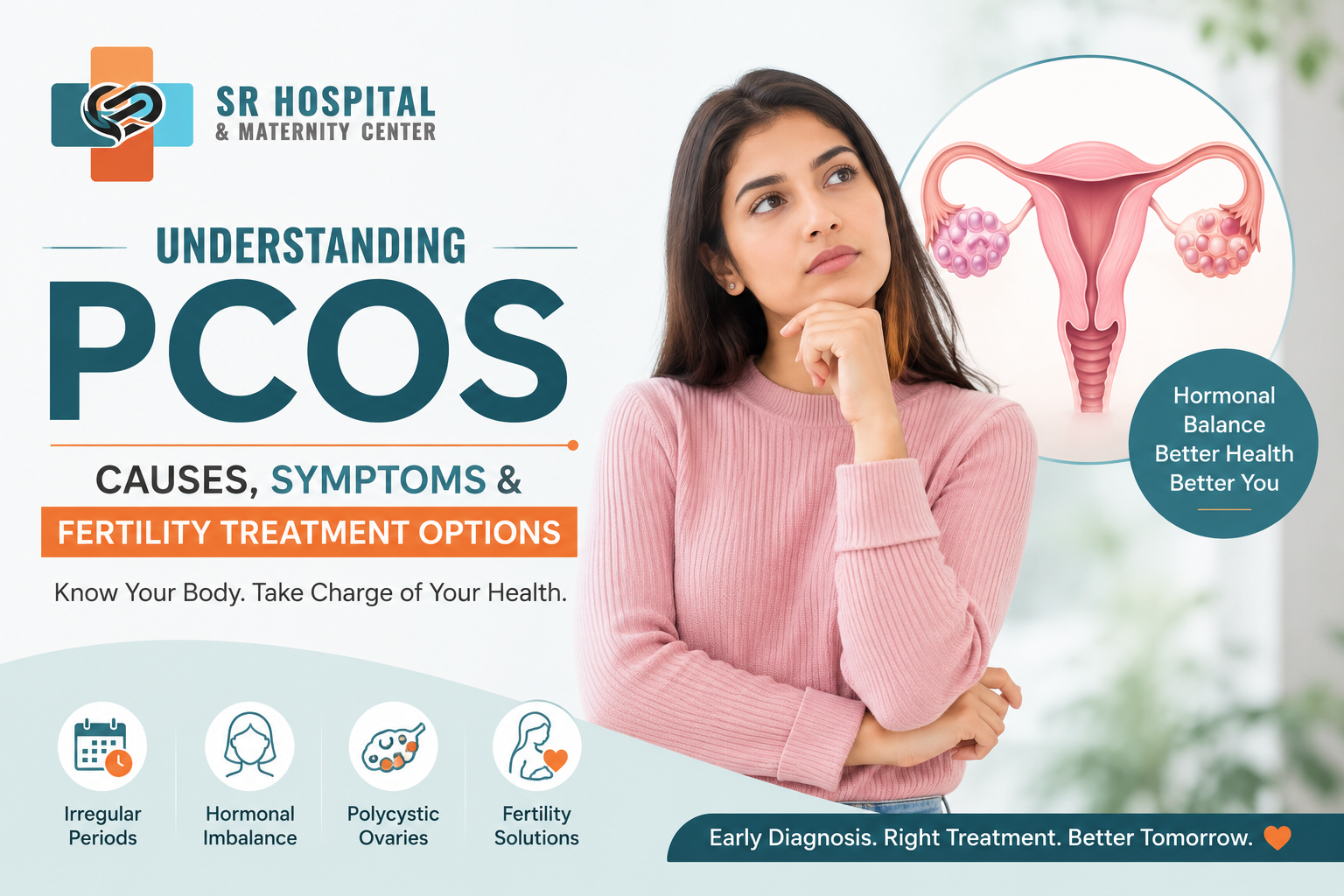
Polycystic ovary syndrome, or PCOS, is a hormonal and metabolic condition that can disturb ovulation, menstrual cycles, skin, hair growth, weight, and fertility. It does not affect every woman in the same way, and having PCOS does not mean pregnancy is impossible.
Some women notice irregular periods, while others seek help for acne, facial hair, weight changes, or difficulty conceiving. PCOS can remain undiagnosed for years.

What Is PCOS?
PCOS affects how the ovaries function and how the body regulates hormones. Women with PCOS may release eggs irregularly, produce higher levels of androgens, or show a polycystic appearance of the ovaries on ultrasound.
Despite the name, a woman does not need to have ovarian cysts to be diagnosed with PCOS. The small follicles sometimes seen on ultrasound are immature egg-containing structures rather than dangerous cysts.
The World Health Organization estimates that PCOS affects roughly 10% to 13% of women of reproductive age, while many remain unaware that they have it.
What Causes PCOS?
There is no single confirmed cause of PCOS. It appears to develop through a combination of genetic, hormonal, and metabolic factors.
How Does Insulin Resistance Affect PCOS?
Insulin helps move glucose from the blood into the body’s cells. When cells respond poorly to insulin, the body may produce more of it to keep blood glucose controlled.
Higher insulin levels can encourage the ovaries to produce additional androgens. This can interfere with ovulation and contribute to irregular periods, acne, facial hair, and difficulty managing weight.
Are Androgens Responsible for PCOS Symptoms?
Androgens are hormones present in both women and men. In PCOS, higher androgen activity may prevent normal egg development and ovulation.
This hormonal pattern may also cause persistent acne, coarse hair on the face or body, and thinning hair on the scalp.
Can PCOS Run in Families?
PCOS can occur more frequently among close relatives. A woman may have a higher likelihood of developing it when her mother or sister has PCOS, irregular ovulation, or related metabolic concerns.
Genetics alone does not determine who develops symptoms. Insulin response, sleep, activity, and other health factors may influence how PCOS appears.
What Are the Common Symptoms of PCOS?
PCOS symptoms may begin around puberty but become clearer later when cycles remain irregular or pregnancy does not occur.
- Periods that are widely spaced, unpredictable, or absent
- Heavy bleeding after long gaps between periods
- Difficulty identifying ovulation
- Acne that continues beyond adolescence
- Coarse facial or body hair
- Thinning hair near the front or top of the scalp
- Weight gain or difficulty losing weight
- Dark, thickened skin around the neck, groin, or underarms
- Skin tags
- Difficulty becoming pregnant
A woman does not need every symptom, and PCOS can occur without excess weight.
How Is PCOS Diagnosed?
PCOS is diagnosed by combining medical history, symptoms, examination, blood tests, and sometimes pelvic ultrasound. No single blood test or scan can confirm every case.
The gynecologist may ask about cycle length, weight changes, acne, hair growth, medicines, pregnancy plans, and family history. Blood tests may assess androgens, thyroid function, prolactin, and glucose control.
A pelvic scan can examine the ovaries and uterine lining. SR Hospital’s radiology and ultrasound services may be used when imaging is advised as part of a gynecological evaluation.

Can PCOS Cause Infertility?
PCOS can make pregnancy take longer because ovulation may happen infrequently or not occur in some cycles. It is one of the most common causes of infertility related to ovulation.
However, many women with PCOS conceive naturally or with treatment. Fertility depends on more than PCOS alone, including age, ovarian reserve, fallopian tube health, sperm quality, and how long the couple has been trying.
Women with highly irregular periods may discuss fertility early. Assessment can confirm whether ovulation is occurring and whether both partners need testing.
How Is PCOS Treated When Pregnancy Is Not the Current Goal?
Treatment is selected according to the symptom causing the greatest concern. There is no single medicine that treats every aspect of PCOS.
How Are Irregular Periods Managed?
Hormonal contraceptive pills or periodic progestogen may be prescribed to regulate bleeding and protect the uterine lining. The choice depends on medical history and whether contraception is required.
What Helps Acne and Excess Hair Growth?
Hormonal or dermatological treatment may reduce androgen-related acne and unwanted hair. Pregnancy plans must be discussed because some medicines are unsuitable during pregnancy.
Does Metformin Treat PCOS?
Metformin improves insulin response and may be considered when insulin resistance, prediabetes, or metabolic risk is present. It is not suitable for every patient and should not be self-started.
What Fertility Treatments Are Available for PCOS?
Fertility treatment usually begins by encouraging regular ovulation while also checking for other causes of infertility.
Can Lifestyle Changes Restore Ovulation?
Balanced nutrition, regular activity, adequate sleep, and gradual weight management can improve insulin response and cycle regularity. Extreme dieting is not recommended.
Which Medicines Help Women Ovulate?
Ovulation-induction medicines may be prescribed when eggs are not released regularly. Cycle monitoring checks treatment response and helps reduce the risk of multiple pregnancy.
Injectable medicines or in vitro fertilisation may be considered when simpler treatment does not work or another fertility factor is present.
Women seeking assessment can review SR Hospital’s gynecology services for PCOS and fertility concerns.

Can PCOS Affect Health Beyond Periods and Fertility?
PCOS is not only a menstrual condition. It may increase the likelihood of insulin resistance, type 2 diabetes, high blood pressure, abnormal cholesterol, sleep apnoea, anxiety, depression, or thickening of the uterine lining.
Long gaps without periods may require treatment to protect the endometrium. Long-term care may include blood pressure, glucose, and cholesterol checks.
When Should You See a Gynecologist?
Arrange an evaluation when periods remain absent for months, become unusually heavy, or occur with worsening acne, facial hair, scalp hair loss, or fertility difficulty.
PCOS symptoms can overlap with thyroid disease, raised prolactin, pregnancy, medication effects, and other hormone disorders.
The Obstetrics and Gynecology Department at SR Hospital provides evaluation for menstrual disorders, PCOS, fertility concerns, pregnancy care, and minimally invasive gynecological treatment.
Frequently Asked Questions About PCOS
Can PCOS be cured permanently?
PCOS does not currently have a permanent cure, but its menstrual, skin, fertility, and metabolic effects can often be managed successfully with personalised treatment and monitoring.
Can a woman with PCOS become pregnant naturally?
Yes. Some women with PCOS ovulate occasionally and conceive naturally. Others need lifestyle support, ovulation-induction medicine, or fertility treatment depending on age and other reproductive factors.
Is PCOS the same as having ovarian cysts?
No. PCOS is a hormonal and metabolic syndrome. A polycystic ovarian appearance can support diagnosis, but ovarian cysts are not required and may occur in women without PCOS.
When should fertility testing begin with PCOS?
Women with very irregular or absent periods may seek advice early rather than waiting twelve months. Age, cycle pattern, previous pregnancy history, and partner factors influence the timing of testing.
PCOS Care at SR Hospital & Maternity Centre
Effective PCOS care starts by identifying the main goal: predictable periods, relief from acne or unwanted hair, improved metabolic health, or pregnancy.
SR Hospital & Maternity Centre provides gynecology consultations, diagnostics, menstrual care, fertility assessment, and pregnancy services in Ghaziabad, Khora Colony, Noida Sector 62, and nearby areas.
To discuss persistent PCOS symptoms or fertility concerns, contact SR Hospital & Maternity Centre for an appointment.
