


Kidney-stone pain often starts in the side or back below the ribs and can move toward the lower abdomen or groin. Severe waves of pain, nausea and blood in urine can occur; fever or inability to pass urine makes the situation urgent.
Where Is Kidney Stone Pain Felt?
Kidney stone pain typically begins in the flank or side below the ribs. As a stone moves through the ureter, pain may travel toward the lower abdomen, groin or testicle and arrive in intense waves. Nausea, vomiting, sweating, urinary urgency and visible or microscopic blood can accompany a stone. Small stones may cause little discomfort, while size, location and blockage influence what happens next.
Kidney Stone Pain From the Flank to the Groin
Fever or chills with suspected stone pain is particularly concerning because an infected, obstructed kidney can become an emergency. Inability to pass urine, uncontrolled pain and persistent vomiting also need urgent care. Urine testing checks for blood and infection, blood tests assess kidney function, and imaging identifies location and obstruction. Ultrasound avoids radiation, while CT may detect stones that ultrasound misses in appropriate adults.
Urine Changes, Nausea and Other Kidney Stone Symptoms
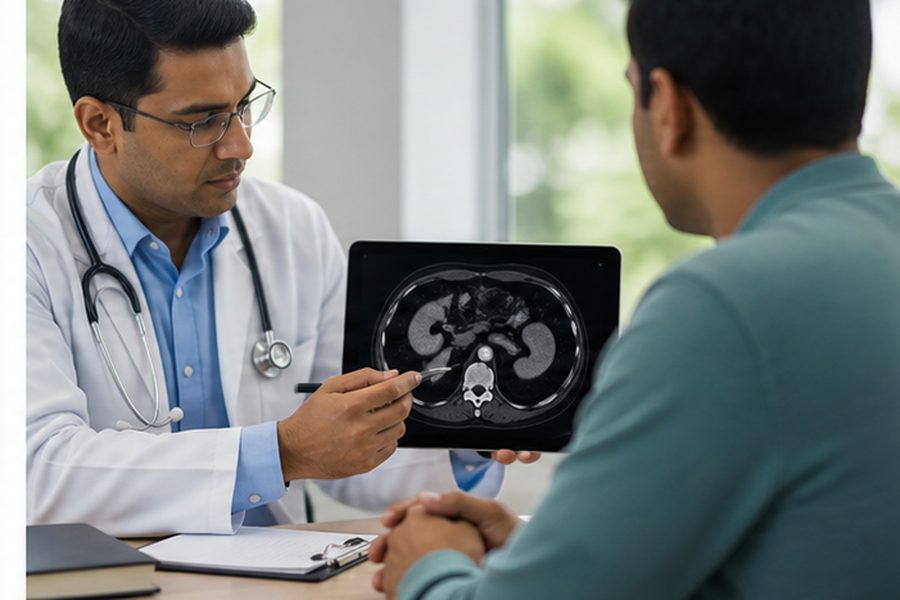
For kidney stone symptoms and pain location, a dated record is more useful than a long list of internet possibilities. The following steps help preserve the details a clinician may need:
- Note which side hurts, whether pain moves, and urinary symptoms.
- Drink normally unless vomiting, unable to urinate or given different advice.
- Use only suitable pain relief and seek care if it does not control pain.
- If a stone passes, ask how to collect it safely for analysis.
Do not label kidney stone symptoms and pain location from one symptom or home reading. Persistence, recurrence and its effect on sleep, food, movement, work or school help determine when a routine urologist / kidney stone care review is reasonable.
Kidney Stone Emergency Signs: Fever, Blockage and Uncontrolled Pain
The following warning signs change kidney stone symptoms and pain location from an information question into an urgent-care decision. If the person is severely unwell, use local emergency services instead of waiting for an online reply or routine booking:
- Fever or chills with side pain
- Inability to pass urine or very low urine output
- Uncontrolled pain or repeated vomiting
- Pregnancy, a single kidney or known kidney disease with acute symptoms
The threshold for assessing kidney stone symptoms and pain location may be lower during pregnancy, infancy or older age, and with immune suppression, recent surgery, significant injury or serious existing disease. Worsening symptoms deserve timely in-person care.
Urine Tests, Ultrasound and CT for Suspected Kidney Stones
Assessment commonly includes urine and blood tests plus imaging. CT is often used in adults with severe suspected stone pain, while ultrasound may be preferred in pregnancy and younger patients.
Before a visit about kidney stone symptoms and pain location, write down onset, progression, relevant exposures, current medicines and previous episodes. Bring actual reports. This makes it easier to select tests that answer a clinical question and avoid unfocused testing.
Urology and Kidney Stone Care in Ghaziabad
For people in Ghaziabad and nearby areas seeking an assessment for kidney stone symptoms and pain location, SR Hospital and Maternity Center provides access to urologist / kidney stone care services. Urgent symptoms need immediate care; stable or recurring concerns can be booked for a focused consultation.

For this urologist / kidney stone care visit, bring identification, prescriptions, allergy details, prior reports and a short timeline. If kidney stone symptoms and pain location changes while waiting, reassess urgency rather than assuming the original booking plan remains appropriate.
FAQs About Kidney Stone Symptoms And Pain Location
Where is kidney stone pain usually felt?
The key point about kidney stone symptoms and pain location is that the main symptom must be read alongside timing, severity and associated changes. Kidney stone pain typically begins in the flank or side below the ribs. As a stone moves through the ureter, pain may travel toward the lower abdomen, groin or testicle and arrive in intense waves.
Can kidney stone pain move to the groin?
Note which side hurts, whether pain moves, and urinary symptoms. Drink normally unless vomiting, unable to urinate or given different advice.
Is fever with a kidney stone dangerous?
Testing for kidney stone symptoms and pain location is selected after the history and examination. Assessment commonly includes urine and blood tests plus imaging. CT is often used in adults with severe suspected stone pain, while ultrasound may be preferred in pregnancy and younger patients.
Can an ultrasound detect every kidney stone?
For kidney stone symptoms and pain location, the safe answer depends on age, accompanying symptoms, medicines and existing conditions. Do not change treatment or preparation from a general article; follow individual clinical instructions and seek help if the condition worsens.
When should kidney stone pain go to emergency care?
For an appointment about kidney stone symptoms and pain location, bring a clear timeline, current medicines and available records. Seek urgent help for fever or chills with side pain, inability to pass urine or very low urine output, or any rapidly worsening change rather than waiting for routine care.
Final Thoughts
Understanding kidney stone symptoms and pain location can help you make safer, more confident decisions. Pay attention to changes, seek timely medical care when symptoms persist or worsen, and read our blogs for more practical health information.