
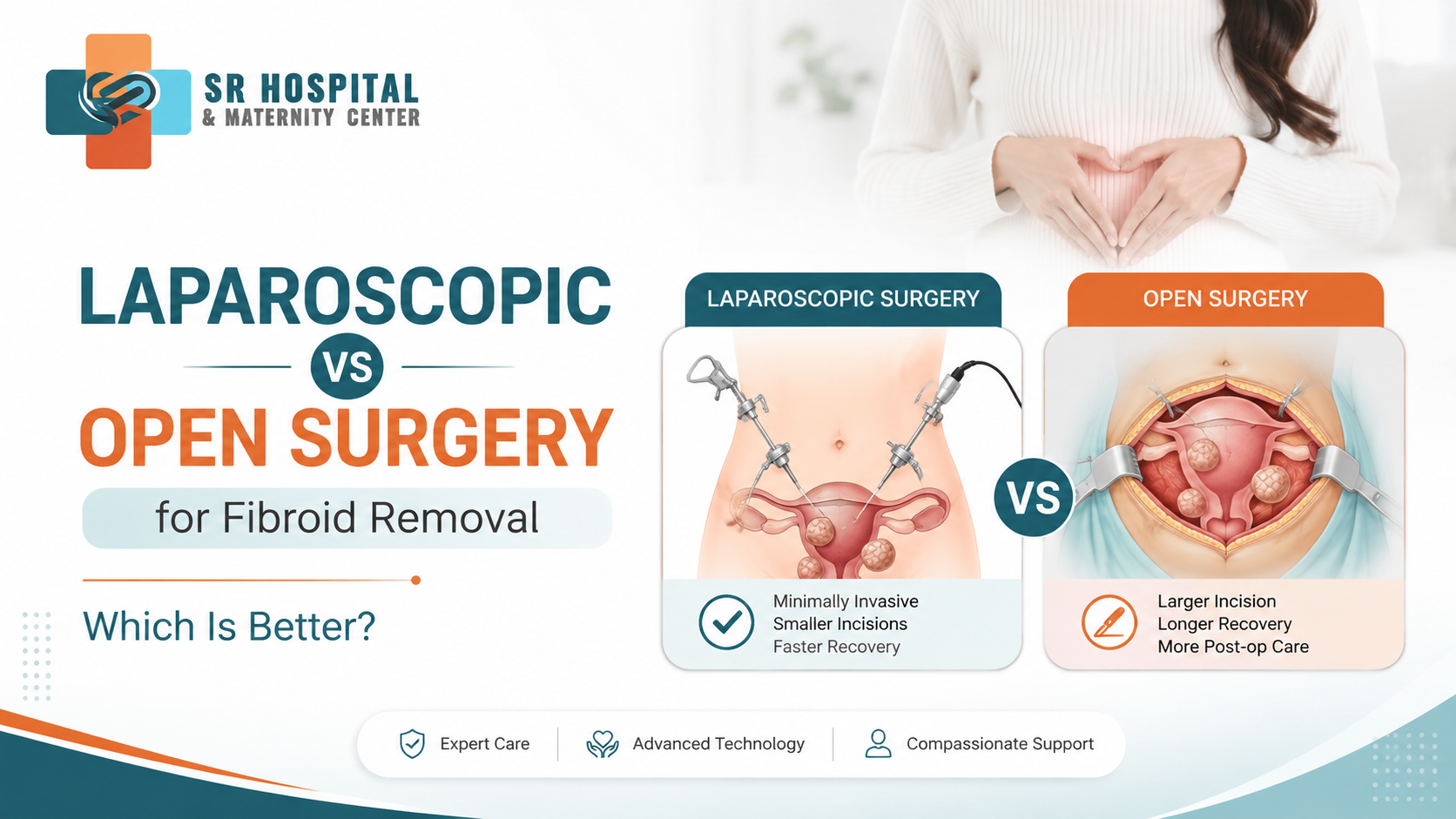
For many women, laparoscopic fibroid removal offers less pain, smaller scars, and faster recovery than open surgery. However, open surgery may still be the safer and more effective choice when fibroids are very large, numerous, deeply embedded, or difficult to remove through small incisions.
The right procedure isn’t decided by fibroid size alone. Its location, number, effect on fertility, previous surgeries, symptoms, and the surgeon’s experience all influence the treatment plan.

What Are Uterine Fibroids?
Uterine fibroids are non-cancerous growths that develop within or around the muscular wall of the uterus. They are also called leiomyomas or myomas.
Some fibroids remain small and cause no problems. Others can contribute to:
- Heavy or prolonged menstrual bleeding
- Pelvic pressure or lower abdominal pain
- Pain during intercourse
- Frequent urination
- Constipation
- Anaemia
- Difficulty becoming pregnant
- Pregnancy-related complications
Fibroids vary widely in size, number, and position. These differences explain why one surgical technique isn’t suitable for every patient.
When Is Surgery Recommended for Fibroids?
Surgery may be considered when fibroid symptoms significantly affect daily life or when medicines haven’t provided enough relief.
A gynecologist may discuss surgery when a woman has persistent heavy bleeding, severe anaemia, ongoing pelvic pain, bladder pressure, rapidly increasing abdominal size, fertility concerns, or repeated pregnancy problems linked to fibroids.
Not every diagnosed fibroid needs removal. Small, symptom-free fibroids may only require periodic monitoring through examination and imaging.
An evaluation through the hospital’s obstetrics and gynecology department can help determine whether observation, medication, a minimally invasive procedure, or surgery is appropriate.
What Is a Myomectomy?
A myomectomy removes fibroids while keeping the uterus in place. It is commonly considered for women who wish to preserve their uterus or may want to become pregnant later.
The removed fibroid does not grow back. However, new fibroids can develop in other areas of the uterus after surgery.
Myomectomy may be performed through:
- Laparoscopic surgery
- Open abdominal surgery
- Hysteroscopic surgery through the vagina and cervix
- Robotic-assisted surgery, where available
This comparison focuses on laparoscopic and open abdominal myomectomy.

How Is Laparoscopic Fibroid Surgery Performed?
Laparoscopic myomectomy is a minimally invasive procedure performed through several small cuts in the abdomen.
A thin camera called a laparoscope gives the surgeon a magnified view of the uterus. Surgical instruments are inserted through the other small incisions to separate the fibroids, control bleeding, and repair the uterine muscle.
The removed tissue may need to be divided into smaller pieces so it can pass through the small incisions. The surgeon should explain the tissue-removal technique, its benefits, and its limitations before consent.
Compared with open surgery, laparoscopic myomectomy generally involves smaller scars, less postoperative discomfort, a shorter hospital stay, and faster recovery.
How Is Open Fibroid Surgery Performed?
Open myomectomy, also called abdominal myomectomy, removes fibroids through a larger incision in the lower abdomen.
The incision may be horizontal along the bikini line or, less commonly, vertical. The wider opening allows the surgeon to directly examine the uterus, remove difficult fibroids, control bleeding, and reconstruct the uterine wall.
Open surgery may be recommended when:
- The uterus is significantly enlarged
- Several fibroids need removal
- A fibroid is particularly large
- Fibroids are located deep inside the uterine muscle
- Extensive uterine repair is expected
- Previous surgery has caused significant internal adhesions
- Minimally invasive removal may not be technically safe
A larger abdominal incision usually means a longer hospital stay and recovery period. However, it can provide better access in complex cases.
Which Procedure Causes Less Pain?
Laparoscopic surgery usually causes less postoperative pain because the abdominal incisions are much smaller.
Patients can still experience discomfort, bloating, cramping, and tiredness after laparoscopy. Carbon dioxide used during the operation can temporarily cause shoulder-tip discomfort or abdominal bloating.
Open surgery generally causes more incision-related pain during the first days after the procedure. Pain is managed with prescribed medicines, early mobilisation, and postoperative monitoring.
Which Surgery Has a Faster Recovery?
Recovery is generally faster after laparoscopic myomectomy.
Many patients can gradually return to routine activities within a few weeks, depending on the complexity of the procedure and the nature of their work. Open abdominal surgery often requires a longer period before lifting, exercise, driving, and full working activity can resume.
Recovery can be affected by:
- The number and depth of fibroids removed
- Blood loss during surgery
- Anaemia before the operation
- Existing health conditions
- Infection or other complications
- The extent of uterine repair
- The patient’s physical activity and occupation
A patient should follow the surgeon’s recovery instructions rather than resuming normal activity solely because the external wound looks healed.
Is Laparoscopic Surgery Always Better?
No. Laparoscopic surgery is less invasive, but it isn’t automatically the best approach for every fibroid.
A minimally invasive procedure is only beneficial when the fibroids can be removed safely and the uterine wall can be repaired properly. Attempting laparoscopy for a highly complex case may increase operating time, blood loss, or the chance of conversion to open surgery.
Open surgery may provide better control when fibroids are very large, numerous, or deeply located.
The best operation is the one that removes the relevant fibroids safely, controls bleeding, reconstructs the uterus effectively, and supports the patient’s reproductive plans.

How Do Doctors Choose Between Laparoscopic and Open Surgery?
Doctors usually review the fibroid map rather than relying on a single measurement.
Number of fibroids
One or a few accessible fibroids may be suitable for laparoscopic removal. Numerous fibroids spread across the uterus may require open surgery.
Size of the largest fibroid
Large fibroids can sometimes be removed laparoscopically by an experienced surgeon, but size can increase technical difficulty.
Location within the uterus
Fibroids growing outside the uterus may be easier to access laparoscopically. Deep intramural fibroids may require more extensive uterine reconstruction.
Fibroids projecting into the uterine cavity may be better treated through hysteroscopy rather than abdominal surgery.
Previous operations
Previous C-sections, myomectomies, or abdominal procedures can create adhesions that affect surgical access.
Fertility plans
Women considering pregnancy need careful uterine repair. The surgeon may also advise how long to wait before attempting conception and whether a future Caesarean delivery may be recommended.
Pelvic ultrasound is commonly used to identify the size and position of fibroids. Patients can review available radiology and ultrasound services when imaging is advised.
Does the Type of Myomectomy Affect Fertility?
Both laparoscopic and open myomectomy preserve the uterus, but no procedure can guarantee pregnancy.
Fertility after surgery depends on several factors, including age, ovarian reserve, fallopian tube health, sperm factors, fibroid location, uterine scarring, and whether the fibroids were actually affecting implantation.
Proper patient selection and skilled uterine reconstruction remain important when future pregnancy is a priority.
Women planning pregnancy should discuss:
- Whether all fibroids need removal
- Whether the uterine cavity is distorted
- How deeply the uterus will be cut
- How long healing may take
- Whether future labour is advisable
- Whether Caesarean delivery may be needed
After conception, women with previous uterine surgery may require closer antenatal observation. Read our guide to high-risk pregnancy warning signs for symptoms that should be assessed promptly.
What Are the Possible Risks of Fibroid Surgery?
Both procedures carry surgical risks, although the likelihood and severity vary by case.
- Bleeding or blood transfusion
- Infection
- Injury to the bladder, bowel, ureter, or blood vessels
- Blood clots
- Anaesthesia-related complications
- Scar tissue formation
- Conversion from laparoscopic to open surgery
- Weakening or scarring of the uterine wall
- Development of new fibroids later
Rarely, severe bleeding may make hysterectomy necessary to protect the patient’s life. This possibility should be discussed during informed consent, even when the planned operation is uterus-preserving.
What Questions Should You Ask Before Choosing Surgery?
A clear discussion with the gynecologist is more useful than choosing a procedure based only on scar size.
- How many fibroids do I have?
- Where are they located?
- Do all of them need removal?
- Am I suitable for laparoscopic surgery?
- Why might open surgery be safer in my case?
- What is the chance of conversion to open surgery?
- How could the operation affect future pregnancy?
- How long will hospitalisation and recovery take?
- Is blood transfusion a realistic possibility?
- What symptoms require urgent review after discharge?
Laparoscopic or Open Surgery: Which Is Better?
Laparoscopic surgery is often preferred when fibroids are suitable for minimally invasive removal because recovery is usually faster and scarring is smaller. Open surgery remains an important option for large, multiple, deeply placed, or technically complex fibroids.
Neither approach should be selected without pelvic examination, ultrasound or other imaging, symptom assessment, and discussion of future fertility.
Women experiencing heavy menstrual bleeding, pelvic pain, abdominal pressure, anaemia, or fertility concerns can contact SR Hospital & Maternity Centre for gynecology evaluation and an individual treatment plan.
Frequently Asked Questions About Fibroid Removal Surgery
Is laparoscopic surgery better than open surgery for fibroids?
Laparoscopic surgery is often preferred when fibroids can be removed safely through small incisions because recovery is usually faster and scarring is smaller. Open surgery may be more suitable for very large, multiple, deeply placed, or complex fibroids.
Can large fibroids be removed laparoscopically?
Some large fibroids can be removed laparoscopically, depending on their location, number, uterine size, and the surgeon’s experience. Imaging and clinical assessment are needed before deciding whether minimally invasive surgery is safe.
How long is recovery after laparoscopic myomectomy?
Many patients resume light routine activities within a few weeks, but complete recovery varies with the number and depth of fibroids removed, blood loss, general health, and the extent of uterine repair.
How long is recovery after open myomectomy?
Open myomectomy generally requires a longer recovery because of the larger abdominal incision. Patients may need several weeks before returning to lifting, exercise, driving, and full work duties.
Does fibroid surgery affect fertility?
Myomectomy preserves the uterus and may improve fertility when fibroids are affecting the uterine cavity or implantation. Fertility also depends on age, ovarian reserve, fallopian tube health, sperm factors, and other medical conditions.
Can fibroids grow back after myomectomy?
The fibroids removed during surgery do not grow back, but new fibroids can develop later in other areas of the uterus. Follow-up may be advised if symptoms return.
Is a C-section required after fibroid removal surgery?
Not every woman needs a C-section after myomectomy. The recommendation depends on how deeply the uterine wall was cut, the number and location of fibroids removed, and how the uterus was repaired.
Which fibroid size requires open surgery?
There is no single fibroid size that automatically requires open surgery. Doctors also consider the number of fibroids, their location, uterine enlargement, previous operations, bleeding risk, and surgical complexity.