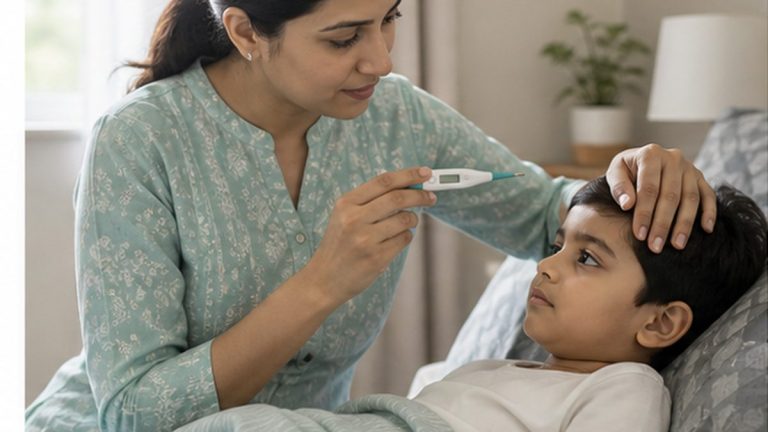

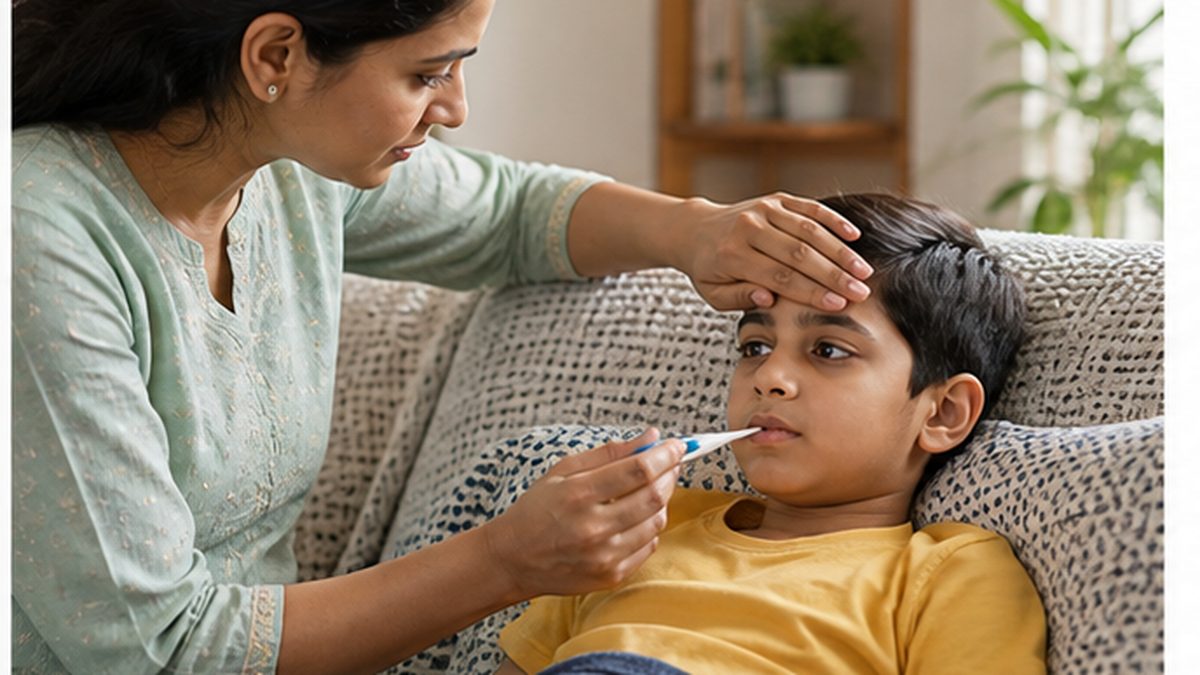
Fever is a temperature of 38°C or higher and is often the body’s response to infection. The child’s age, breathing, alertness, hydration and accompanying symptoms matter more than the number alone.
What Temperature Is a Fever in Babies and Children?
A measured temperature of 38°C or above is generally considered fever, but age changes the response. A baby younger than three months with that temperature needs prompt medical advice even if feeding and appearance seem fairly normal. For older children, watch the child rather than chasing a perfectly normal number. Breathing effort, alertness, drinking, urine output, rash and the ability to interact are more useful signs of how unwell the child may be.
Child Fever by Age: When the Temperature Needs Medical Advice
Fever commonly accompanies viral infections and may settle over several days. It can also occur with ear, throat, chest, urine or other infections, so the accompanying symptoms and examination guide the likely source. A fever does not by itself show that antibiotics are needed. Antibiotics treat selected bacterial infections, not viral illnesses, and giving leftover medicine can cause side effects while delaying the correct diagnosis.
How to Monitor Fever, Fluids and Behaviour at Home
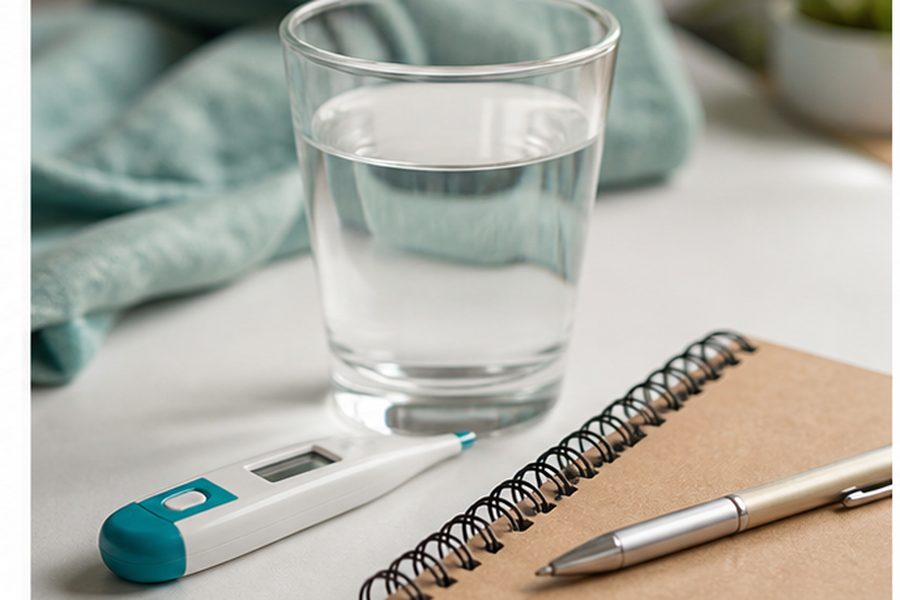
For when to take a child to the doctor for fever, a dated record is more useful than a long list of internet possibilities. The following steps help preserve the details a clinician may need:
- Use a digital thermometer correctly and record the reading, time and method.
- Offer regular fluids or breastfeeds and check urine output, tears and mouth moisture.
- Check the child during the night and notice whether they respond normally.
- Do not sponge with cold water, over-wrap the child or give aspirin.
Do not label when to take a child to the doctor for fever from one symptom or home reading. Persistence, recurrence and its effect on sleep, food, movement, work or school help determine when a routine child specialist / pediatrician review is reasonable.
Child Fever Red Flags: Breathing Trouble, Rash, Seizure and Dehydration
The following warning signs change when to take a child to the doctor for fever from an information question into an urgent-care decision. If the person is severely unwell, use local emergency services instead of waiting for an online reply or routine booking:
- Baby under 3 months with 38°C or higher
- Difficulty breathing, blue or grey lips, or grunting
- First seizure, stiff neck, hard-to-wake child or non-fading rash
- Dehydration, repeated vomiting or fever lasting five days
The threshold for assessing when to take a child to the doctor for fever may be lower during pregnancy, infancy or older age, and with immune suppression, recent surgery, significant injury or serious existing disease. Worsening symptoms deserve timely in-person care.
How a Pediatrician Assesses Persistent or High Fever
A pediatric assessment considers age, vaccination status, exposure, hydration, breathing and examination findings. Tests are selected from the clinical picture; antibiotics do not treat viral fever.
Before a visit about when to take a child to the doctor for fever, write down onset, progression, relevant exposures, current medicines and previous episodes. Bring actual reports. This makes it easier to select tests that answer a clinical question and avoid unfocused testing.
Pediatric Consultation for Child Fever in Ghaziabad
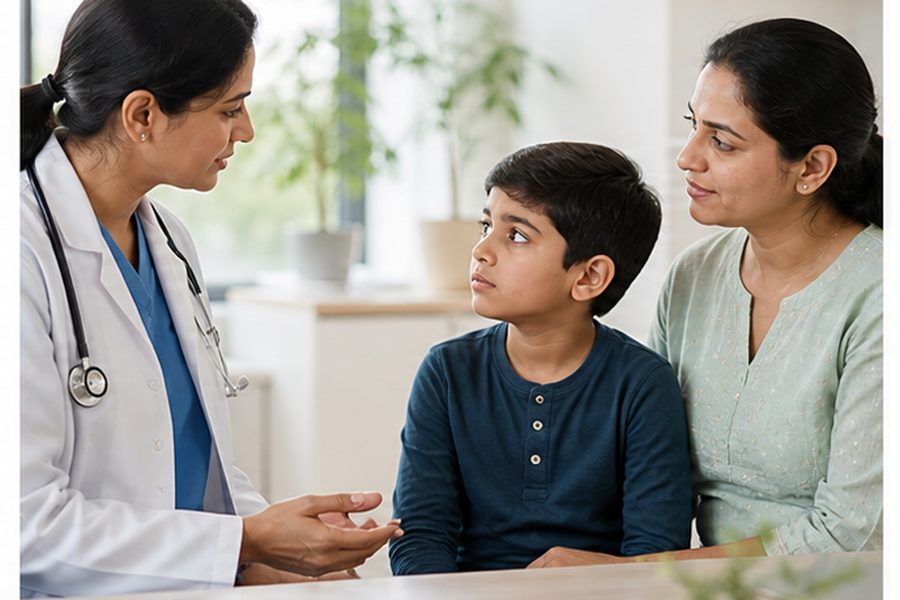
For people in Ghaziabad and nearby areas seeking an assessment for when to take a child to the doctor for fever, SR Hospital and Maternity Center provides access to child specialist / pediatrician services. Urgent symptoms need immediate care; stable or recurring concerns can be booked for a focused consultation.
For this child specialist / pediatrician visit, bring identification, prescriptions, allergy details, prior reports and a short timeline. If when to take a child to the doctor for fever changes while waiting, reassess urgency rather than assuming the original booking plan remains appropriate.
FAQs About When To Take A Child To The Doctor For Fever
What temperature is considered a fever in a child?
The key point about when to take a child to the doctor for fever is that the main symptom must be read alongside timing, severity and associated changes. A measured temperature of 38°C or above is generally considered fever, but age changes the response. A baby younger than three months with that temperature needs prompt medical advice even if feeding and appearance seem fairly normal.
When should I take my child to hospital for fever?
Use a digital thermometer correctly and record the reading, time and method. Offer regular fluids or breastfeeds and check urine output, tears and mouth moisture.
How often should I check a child’s temperature?
Testing for when to take a child to the doctor for fever is selected after the history and examination. A pediatric assessment considers age, vaccination status, exposure, hydration, breathing and examination findings. Tests are selected from the clinical picture; antibiotics do not treat viral fever.
Can fever in a child be managed at home?
For when to take a child to the doctor for fever, the safe answer depends on age, accompanying symptoms, medicines and existing conditions. Do not change treatment or preparation from a general article; follow individual clinical instructions and seek help if the condition worsens.
Does a child with fever need antibiotics?
For an appointment about when to take a child to the doctor for fever, bring a clear timeline, current medicines and available records. Seek urgent help for baby under 3 months with 38°C or higher, difficulty breathing, blue or grey lips, or grunting, or any rapidly worsening change rather than waiting for routine care.
Final Thoughts
Understanding when to take a child to the doctor for fever can help you make safer, more confident decisions. Pay attention to changes, seek timely medical care when symptoms persist or worsen, and read our blogs for more practical health information.