

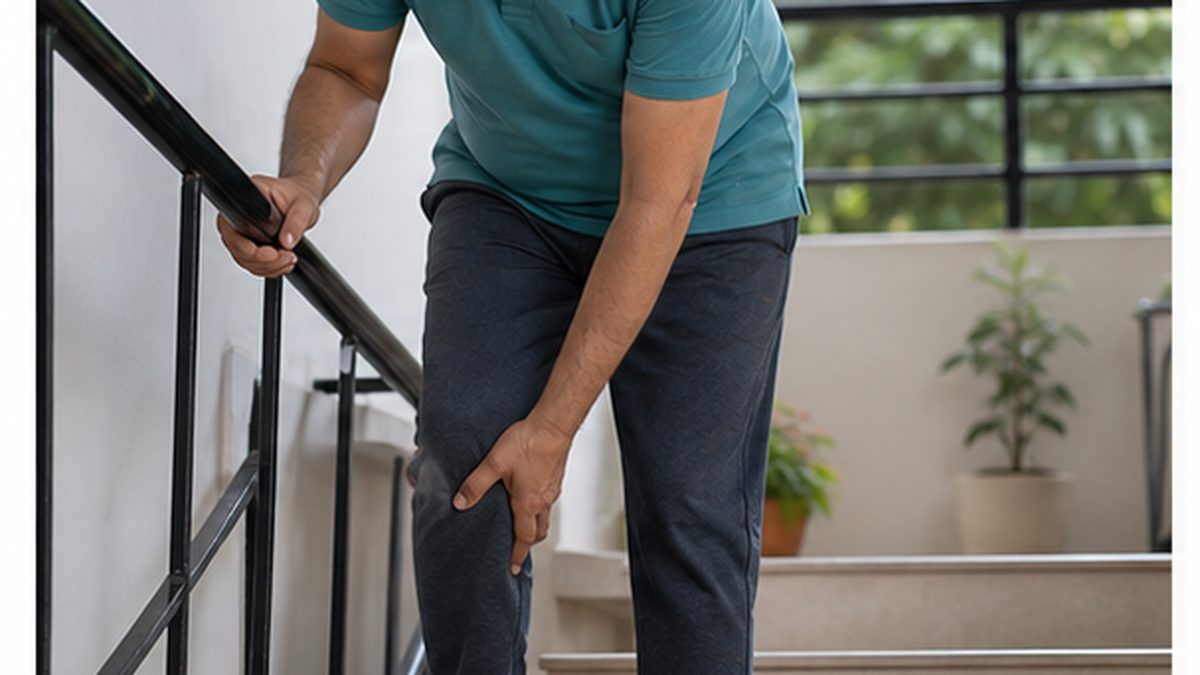
Pain on stairs can arise from kneecap overload, tendon irritation, previous injury or arthritis, but the location and activity pattern do not establish a diagnosis. Swelling, locking and weight-bearing ability help determine urgency.
Why Does the Knee Hurt While Climbing Stairs?
Stairs load the kneecap joint more than level walking, so pain at the front of the knee commonly appears while climbing, descending, squatting or standing after sitting. This pattern may reflect patellofemoral pain, tendon overload or altered movement mechanics. Arthritis is another possibility, especially with age, stiffness or previous injury, but stair pain alone does not prove cartilage loss. Meniscus or ligament injury becomes more relevant after twisting, swelling, locking or instability.
Kneecap Pain, Tendon Irritation, Injury and Arthritis
Relative rest means reducing the movement that sharply aggravates pain while keeping the leg gently active. Complete inactivity can increase stiffness and weakness; the right progression depends on pain, swelling and the examination. A hot red knee with fever, major deformity, inability to bear weight or a locked joint needs urgent assessment. Painless clicking without swelling is common and is different from a knee that painfully catches or gives way.
How to Modify Walking, Stairs and Exercise During Knee Pain
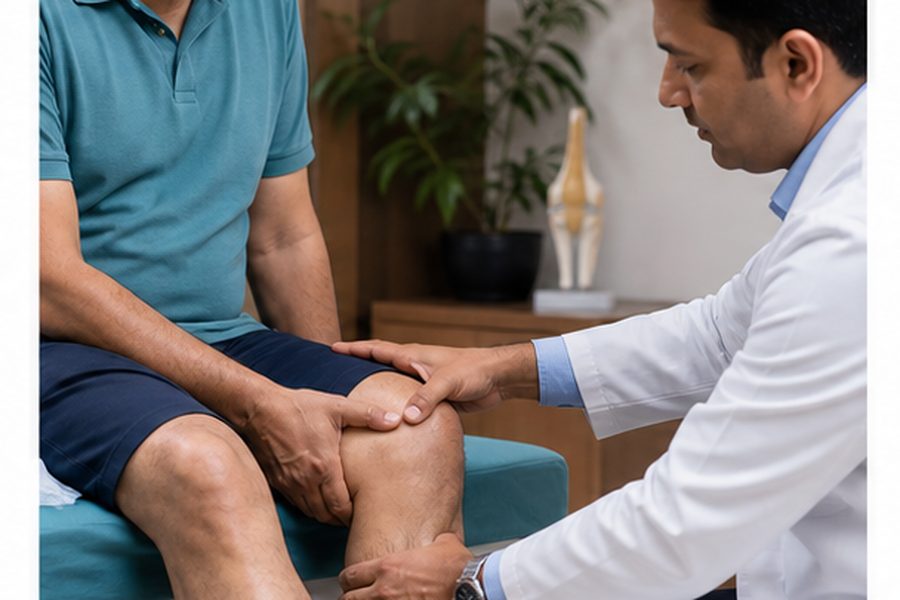
For knee pain while climbing stairs, a dated record is more useful than a long list of internet possibilities. The following steps help preserve the details a clinician may need:
- Reduce aggravating activity for a short period without prolonged complete rest.
- Use a wrapped cold pack for a recent painful flare and avoid direct ice on skin.
- Record swelling, locking, giving way, injury and morning stiffness.
- Choose supportive footwear and resume activity gradually as symptoms allow.
Do not label knee pain while climbing stairs from one symptom or home reading. Persistence, recurrence and its effect on sleep, food, movement, work or school help determine when a routine orthopedic doctor review is reasonable.
Knee Pain Red Flags: Swelling, Locking and Inability to Bear Weight
The following warning signs change knee pain while climbing stairs from an information question into an urgent-care decision. If the person is severely unwell, use local emergency services instead of waiting for an online reply or routine booking:
- A deformed knee after injury
- Inability to bear weight or move the knee
- A hot, red, swollen knee with fever or feeling unwell
- A locked knee or rapidly increasing swelling
The threshold for assessing knee pain while climbing stairs may be lower during pregnancy, infancy or older age, and with immune suppression, recent surgery, significant injury or serious existing disease. Worsening symptoms deserve timely in-person care.
When Knee Pain Needs an X-Ray, Scan or Orthopedic Examination
An orthopedic assessment examines alignment, tenderness, range of motion and stability. Imaging is ordered when it will answer a clinical question; not every stair-related pain needs an X-ray or MRI.
Before a visit about knee pain while climbing stairs, write down onset, progression, relevant exposures, current medicines and previous episodes. Bring actual reports. This makes it easier to select tests that answer a clinical question and avoid unfocused testing.
Orthopedic Consultation for Knee Pain in Ghaziabad
Questions to Ask About Pain on stairs can arise from kneecap overload, tendon irritation, pre
For pain on stairs can arise from kneecap overload, tendon irritation, previous injury or arthritis, but the location and activity pattern do not establish a diagnosis, ask which explanations fit best, which warning signs would change the plan, whether a test is useful now and what improvement should look like. Confirm when follow-up is due if symptoms remain unchanged.
If testing or treatment for pain on stairs can arise from kneecap overload, tendon irritation, previous injury or arthritis, but the location and activity pattern do not establish a diagnosis is suggested, ask what question it answers, what alternatives exist and whether preparation is required. Pregnancy possibility, allergies, organ problems and medicines can affect safe decisions.
For a child or dependent adult with pain on stairs can arise from kneecap overload, tendon irritation, previous injury or arthritis, but the location and activity pattern do not establish a diagnosis, bring the caregiver who knows this episode’s timeline. A dated record can reveal changes that are difficult to reconstruct during a short consultation.
For people in Ghaziabad and nearby areas seeking an assessment for knee pain while climbing stairs, SR Hospital and Maternity Center provides access to orthopedic doctor services. Urgent symptoms need immediate care; stable or recurring concerns can be booked for a focused consultation.

For this orthopedic doctor visit, bring identification, prescriptions, allergy details, prior reports and a short timeline. If knee pain while climbing stairs changes while waiting, reassess urgency rather than assuming the original booking plan remains appropriate.
FAQs About Knee Pain While Climbing Stairs
Why does my knee hurt when climbing stairs?
The key point about knee pain while climbing stairs is that the main symptom must be read alongside timing, severity and associated changes. Stairs load the kneecap joint more than level walking, so pain at the front of the knee commonly appears while climbing, descending, squatting or standing after sitting. This pattern may reflect patellofemoral pain, tendon overload or altered movement mechanics.
Does stair pain always mean knee arthritis?
Reduce aggravating activity for a short period without prolonged complete rest. Use a wrapped cold pack for a recent painful flare and avoid direct ice on skin.
When should knee swelling be checked urgently?
Testing for knee pain while climbing stairs is selected after the history and examination. An orthopedic assessment examines alignment, tenderness, range of motion and stability. Imaging is ordered when it will answer a clinical question; not every stair-related pain needs an X-ray or MRI.
Should I stop walking when my knee hurts?
For knee pain while climbing stairs, the safe answer depends on age, accompanying symptoms, medicines and existing conditions. Do not change treatment or preparation from a general article; follow individual clinical instructions and seek help if the condition worsens.
Does every knee pain need an MRI?
For an appointment about knee pain while climbing stairs, bring a clear timeline, current medicines and available records. Seek urgent help for a deformed knee after injury, inability to bear weight or move the knee, or any rapidly worsening change rather than waiting for routine care.
Final Thoughts
Understanding knee pain while climbing stairs can help you make safer, more confident decisions. Pay attention to changes, seek timely medical care when symptoms persist or worsen, and read our blogs for more practical health information.