

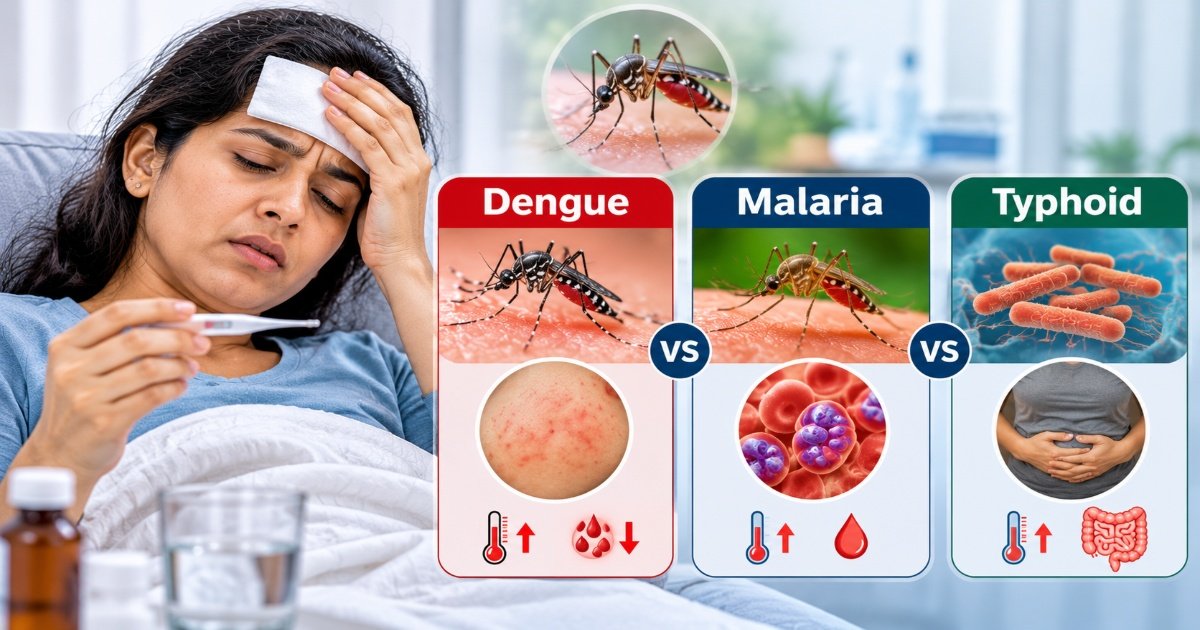
Fever, headache, weakness and body pain are common symptoms of several infections in India. During the monsoon and other periods of increased infection risk, people may become concerned about dengue, malaria or typhoid. These illnesses can initially appear similar, but their causes, methods of transmission, diagnostic tests and treatment approaches are different.
Understanding Dengue vs Malaria vs Typhoid can help patients recognise warning signs and understand why proper medical assessment is important. However, symptoms alone cannot confirm which infection a person has.
If you or a family member has persistent fever, unusual weakness, vomiting or other concerning symptoms, consult a qualified doctor rather than starting medicines without medical advice.
Need medical guidance for fever or infection? Consult the General Medicine team at SR Hospital & Maternity Care for medical assessment and appropriate diagnostic guidance in the Khora Colony and Noida Sector 62 area.
What Is the Difference Between Dengue, Malaria and Typhoid?
Although all three illnesses can cause fever, they develop due to different infectious agents.
What is dengue?
Dengue is a viral infection transmitted through the bite of an infected Aedes mosquito. It is common in tropical and subtropical regions, including India. Symptoms may include high fever, severe headache, pain behind the eyes, muscle pain, joint pain, nausea and skin rash.
Some patients recover with supportive care, while others may develop severe dengue requiring urgent hospital treatment. Importantly, warning signs can appear even after the fever begins to settle.
What is malaria?
Malaria is a parasitic infection caused by Plasmodium parasites and transmitted through the bite of an infected female Anopheles mosquito.
Common malaria symptoms include fever, chills, sweating, headache and body weakness. Some cases can become severe and affect organs such as the brain, kidneys and liver. Early testing and appropriate treatment are important.
What is typhoid?
Typhoid fever is a bacterial infection caused by Salmonella Typhi. It generally spreads through food or water contaminated with the bacteria, often due to poor sanitation or inadequate food hygiene.
Symptoms may include prolonged fever, headache, weakness, abdominal discomfort, constipation or diarrhoea. Without appropriate treatment, typhoid can lead to serious intestinal and other complications.
Dengue vs Malaria vs Typhoid: Key Differences
The following table explains the main differences between these three infections.
| Feature | Dengue | Malaria | Typhoid |
| Cause | Dengue virus | Plasmodium parasite | Salmonella Typhi bacteria |
| Transmission | Infected Aedes mosquito | Infected female Anopheles mosquito | Contaminated food and water |
| Common fever pattern | Often sudden high fever | Fever may occur with chills and sweating | Fever may gradually increase |
| Common symptoms | Headache, eye pain, body aches, rash | Chills, sweating, headache, weakness | Abdominal discomfort, headache, weakness |
| Possible complications | Severe bleeding, shock, organ involvement | Severe anaemia, organ failure, cerebral malaria | Intestinal bleeding or perforation |
| Main diagnostic approach | Dengue-specific blood tests | Blood smear microscopy or rapid diagnostic test | Blood culture |
| Treatment | Supportive medical care | Antimalarial medicines selected by a doctor | Appropriate antibiotics selected by a doctor |
Important: These are general patterns, not diagnostic rules. A person may have an infection without displaying every typical symptom. Clinical assessment and appropriate tests are needed to identify the cause.
Dengue Symptoms: Early Signs and Warning Symptoms
Dengue symptoms commonly develop around 4–10 days after an infected mosquito bite. Some people experience mild illness, while others may develop serious complications.
Common dengue symptoms include:
- Sudden high fever
- Severe headache
- Pain behind the eyes
- Muscle and joint pain
- Nausea or vomiting
- Skin rash
- Unusual tiredness
One important feature of dengue is that the patient may develop warning signs when the fever starts going away. A reduction in temperature does not always mean that the patient is recovering safely.
Warning signs requiring immediate medical attention:
- Severe abdominal pain or tenderness
- Persistent vomiting
- Bleeding from the nose or gums
- Blood in vomit or stool
- Extreme weakness, restlessness or unusual drowsiness
- Difficulty breathing
- Pale, cold or clammy skin
Do not wait for all these symptoms to appear before seeking medical care.
Malaria Symptoms: What Should You Look For?
Malaria symptoms may begin within days or weeks after an infected mosquito bite, depending on the parasite species.
Common malaria symptoms include:
- Fever
- Chills or shivering
- Excessive sweating
- Headache
- Muscle pain
- Nausea and vomiting
- General weakness
Some people associate malaria with a fixed pattern of fever followed by chills and sweating. However, not every patient experiences this classic pattern. Fever timing alone cannot confirm malaria.
Signs of severe malaria include:
- Confusion or altered consciousness
- Seizures
- Difficulty breathing
- Severe weakness
- Jaundice
- Dark or bloody urine
- Abnormal bleeding
Severe malaria can progress rapidly. Anyone experiencing these symptoms needs emergency medical assessment.
Typhoid Symptoms: Early and Advanced Signs
Typhoid symptoms often develop gradually. A patient may initially experience mild fever and weakness, followed by increasing discomfort over several days.
Common typhoid symptoms include:
- Persistent fever
- Headache
- Weakness and fatigue
- Abdominal pain or discomfort
- Loss of appetite
- Constipation or diarrhoea
- Nausea
- Sometimes a skin rash
Typhoid is particularly associated with unsafe drinking water, contaminated food and inadequate hand hygiene.
Possible complications of untreated typhoid include:
- Intestinal bleeding
- Intestinal perforation
- Severe dehydration
- Confusion or altered mental status
- Serious systemic infection
If fever continues for several days or is accompanied by abdominal symptoms, consult a doctor for proper evaluation.
Which Tests Are Used to Diagnose Dengue, Malaria and Typhoid?
A common question is: Which blood test confirms dengue, malaria or typhoid?
The answer depends on the suspected infection, the duration of symptoms and the patient’s clinical condition.
Dengue tests
Doctors may recommend:
- NS1 antigen test: Often used for early detection during the initial days of illness.
- Dengue IgM antibody test: Helps identify the body’s antibody response, generally becoming useful later in the illness.
- Complete Blood Count (CBC): May help monitor platelet count, white blood cells and haematocrit.
The choice and timing of tests depend on the day of illness and clinical assessment. A platelet count alone cannot confirm dengue.
Malaria tests
Common diagnostic methods include:
- Peripheral blood smear: Examines blood under a microscope to identify malaria parasites and may help identify the species.
- Rapid Diagnostic Test (RDT): Detects specific malaria parasite antigens.
- Additional testing: May be recommended when initial results do not explain persistent symptoms or clinical suspicion remains.
Typhoid tests
Doctors may recommend:
- Blood culture: The preferred method for identifying Salmonella Typhi in suspected typhoid.
- Additional cultures: Stool or other samples may be considered in selected situations.
- Other blood investigations: May help assess the patient’s overall condition.
The Widal test is commonly discussed in India, but it can produce misleading results. It should not be treated as definitive proof of active typhoid infection.
Remember: Do not select tests or interpret reports independently. A doctor should decide which investigations are appropriate.
How Are Dengue, Malaria and Typhoid Treated?
Treatment differs because the three infections have different causes.
Dengue treatment
There is no specific antiviral medicine routinely used to cure dengue. Treatment generally focuses on supportive care, hydration, monitoring and managing symptoms.
Depending on the patient’s condition, hospital observation or admission may be necessary.
A doctor may recommend paracetamol for fever. Aspirin and ibuprofen should generally be avoided in suspected or confirmed dengue because they can increase bleeding risk. Never self-medicate.
Malaria treatment
Malaria requires antimalarial medicines. The doctor selects treatment according to the parasite species, severity of infection, local medicine-resistance patterns, age and pregnancy status.
Completing the prescribed treatment is essential. Do not stop medicines simply because the fever has reduced.
Typhoid treatment
Typhoid is treated with antibiotics selected by a doctor. The choice depends on clinical assessment, test results and local antibiotic-resistance patterns.
Adequate fluids, nutrition and follow-up are also important. Avoid taking leftover antibiotics or medicines prescribed to another person.
How Can You Prevent Dengue, Malaria and Typhoid?
Prevention is especially important in Indian households, where mosquito exposure, water storage and food hygiene can influence infection risk.
To reduce dengue and malaria risk:
- Prevent water from collecting in coolers, pots, tyres and containers.
- Clean water-storage containers regularly.
- Use mosquito repellents as directed.
- Wear clothing that reduces exposed skin.
- Use window screens and mosquito nets where appropriate.
- Keep surroundings clean and remove potential mosquito breeding sites.
To reduce typhoid risk:
- Drink safe, treated or properly boiled water.
- Wash hands before eating and preparing food.
- Eat freshly cooked food.
- Wash fruits and vegetables properly.
- Avoid food from unhygienic surroundings.
- Maintain clean kitchen and toilet facilities.
- Discuss typhoid vaccination with a healthcare professional when appropriate.
These precautions can reduce infection risk, although they cannot guarantee complete protection.
When Should You Visit a Hospital for Fever?
Not every fever is caused by dengue, malaria or typhoid. Viral infections, chikungunya, respiratory infections and other conditions can produce similar symptoms.
Seek medical assessment if:
- Fever persists or repeatedly returns.
- You experience severe headache or body pain.
- You develop repeated vomiting or abdominal pain.
- You have chills with sweating.
- You notice unusual weakness or reduced urine output.
- Fever occurs after mosquito exposure or travel to an infection-prone area.
Seek emergency care immediately for bleeding, severe abdominal pain, difficulty breathing, seizures, confusion, fainting or signs of shock.
Early evaluation can help identify the cause of fever and reduce the risk of complications.
Fever and Infection Consultation Near Khora Colony and Noida Sector 62
If you are searching for a general physician in Ghaziabad, fever consultation near Khora Colony or medical care near Noida Sector 62, timely assessment is important when symptoms persist or become severe.
At SR Hospital & Maternity Care, the General Medicine department provides consultation for fever, dengue, typhoid and other infections. The hospital also lists laboratory testing within the hospital.
Patients from Khora Colony, Prem Vihar, Sector 62A and nearby Noida areas can contact the hospital to enquire about doctor availability and consultation.
Frequently Asked Questions (FAQs)
1. What is the main difference between dengue, malaria and typhoid?
Dengue is caused by a virus spread by Aedes mosquitoes, malaria is caused by Plasmodium parasites spread by Anopheles mosquitoes, and typhoid is a bacterial infection usually transmitted through contaminated food and water.
2. How can I identify dengue fever at home?
High fever, headache, pain behind the eyes, body aches, nausea and rash may occur in dengue. However, these symptoms overlap with other infections. A medical assessment and appropriate blood tests are needed for confirmation.
3. Which is more dangerous: dengue, malaria or typhoid?
All three can become serious if not diagnosed and treated appropriately. Severe dengue can cause bleeding and shock, malaria can cause organ complications, and typhoid can lead to intestinal bleeding or perforation. The severity depends on the patient and the stage of illness.
4. Can dengue, malaria and typhoid cause similar symptoms?
Yes. All three can cause fever, headache, weakness and body pain. This is why doctors may recommend different tests to identify the actual infection.
5. Does a low platelet count always mean dengue?
No. A low platelet count can occur in several medical conditions, including some infections. Dengue should not be diagnosed from platelet count alone.
6. Is the Widal test enough to confirm typhoid?
No. The Widal test has limitations and can produce false-positive results. Blood culture is the preferred diagnostic method for confirming typhoid.
7. Can a person have malaria without chills?
Yes. Although chills are common in malaria, not every patient experiences them. Testing is important when malaria is suspected.
8. Can dengue fever become dangerous after the fever goes away?
Yes. Warning signs of severe dengue can appear around the time the fever decreases. Severe abdominal pain, persistent vomiting, bleeding and unusual weakness require immediate medical attention.
9. How can I prevent these infections during the monsoon?
Avoid mosquito breeding sites, use appropriate mosquito protection, drink safe water, maintain food hygiene and seek medical advice if fever develops.
10. Which doctor should I consult for dengue, malaria or typhoid?
A qualified general physician or internal medicine specialist can assess fever, recommend appropriate tests and guide treatment. Severe symptoms require urgent hospital care.
Conclusion
Dengue, malaria and typhoid may share symptoms, but their causes, transmission methods, diagnostic tests and treatments are different. Recognising warning signs and seeking timely medical advice are more important than trying to identify an infection based only on the fever pattern.
Avoid self-medication, complete prescribed treatment and follow preventive measures at home. If you or a family member has persistent fever or concerning symptoms, consult a qualified doctor.
For fever and infection consultation in the Khora Colony and Noida Sector 62 area, contact SR Hospital.
This article is for general health awareness and does not replace a consultation with a qualified doctor. In an emergency, call 85888 26726 or go to the nearest emergency department.