

Understanding the three common anorectal conditions, how to identify their Piles vs fissure vs fistula
symptoms, and when medical evaluation is important.
Pain during bowel movements, bleeding while passing stool, itching around the anus or unusual discharge can be uncomfortable and concerning. Many people assume these symptoms are caused by piles (haemorrhoids), but they may also indicate an anal fissure or an anal fistula.
Although these three conditions affect the anal region, they are medically different. Their causes, symptoms, diagnostic methods and treatment approaches are not the same. Understanding these differences can help people recognise warning signs and seek appropriate medical advice.
If you are experiencing persistent discomfort, bleeding or swelling, SR Hospital & Maternity Care provides access to general surgery consultation.
What Are Piles, Fissures and Fistulas?
Before comparing their symptoms, it is important to understand what each condition means.
1. What Are Piles (Haemorrhoids)?
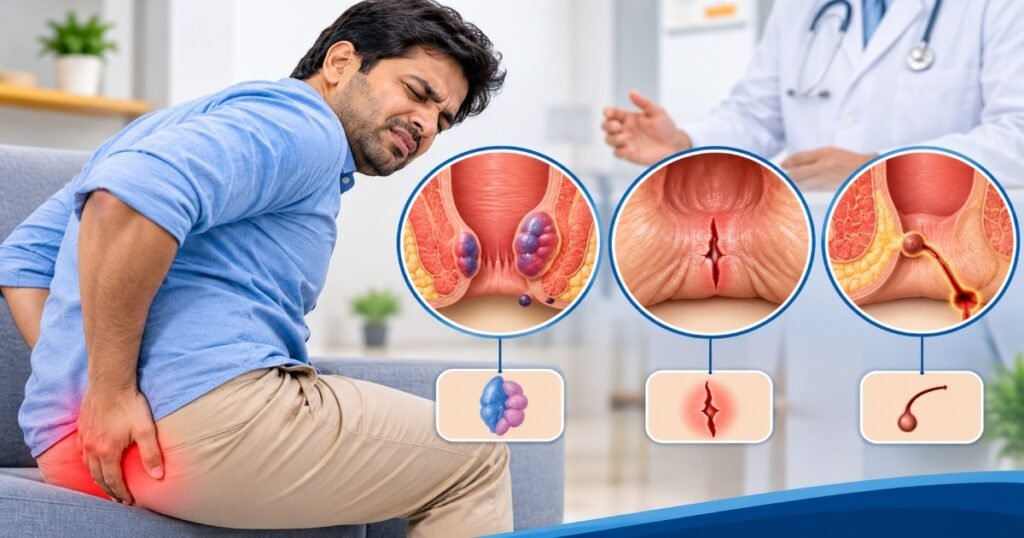
Piles, medically known as haemorrhoids, are swollen vascular cushions inside the rectum or around the anus. These structures normally help maintain bowel control, but they can become enlarged and symptomatic.
Piles are commonly associated with constipation, straining during bowel movements, prolonged sitting on the toilet and increased pressure around the rectal area.
Common symptoms include:
- Bright red blood during or after passing stool.
- Itching or irritation around the anus.
- A soft lump near the anal opening.
- Discomfort while sitting.
- Swelling or tissue protruding during bowel movements.
- A feeling that the bowel has not completely emptied.
Internal piles may cause bleeding without significant pain, while external piles can cause pain and swelling, particularly if a blood clot develops.
2. What Is an Anal Fissure?
An anal fissure is a small tear or crack in the lining of the anal opening. It commonly develops when hard or large stools stretch and injure the sensitive tissue.
Unlike typical internal piles, an anal fissure is often associated with sharp pain during bowel movements.
Common symptoms include:
- Sharp or cutting pain while passing stool.
- Burning discomfort that may continue for hours afterwards.
- Small amounts of bright red blood on toilet paper.
- Pain-related fear of using the toilet.
- A small visible tear near the anal opening.
- Constipation or difficulty passing hard stools.
Acute fissures may heal with appropriate conservative treatment. Chronic fissures can become more difficult to manage and may require specialist assessment.
3. What Is an Anal Fistula?
An anal fistula is an abnormal tunnel that develops between the anal canal and the surrounding skin. It commonly forms following an infection or an anal abscess that does not heal completely.
Unlike piles and fissures, a fistula involves an abnormal passage beneath the skin.
Common symptoms include:
- Persistent or recurring pain around the anus.
- Pus or foul-smelling discharge.
- Repeated swelling near the anal opening.
- A small opening or hole in the surrounding skin.
- Blood-stained discharge.
- Skin irritation and discomfort while sitting.
- Fever or swelling when an associated infection or abscess develops.
An anal fistula generally requires surgical assessment because it does not usually heal permanently on its own.
Piles vs Fissure vs Fistula: Key Differences
The easiest way to understand these conditions is to compare their main characteristics.
| Feature | Piles | Anal Fissure | Anal Fistula |
| Medical condition | Swollen blood vessels | Small tear in anal lining | Abnormal tunnel |
| Common symptom | Bleeding and itching | Sharp pain during stool | Repeated discharge |
| Pain | May be absent or present | Often significant | Persistent or recurring |
| Bleeding | Common | Can occur | Sometimes occurs |
| Lump or swelling | May be present | Sometimes a skin tag | May have an external opening |
| Pus discharge | Not typical | Not typical | Common |
| Main causes | Straining and constipation | Hard stools or repeated irritation | Often previous anal abscess |
| Treatment | Lifestyle changes, medicines or procedures | Stool management, medicines or selected procedures | Usually surgical evaluation |
Important: These symptoms can overlap. A person cannot reliably distinguish piles, fissures and fistulas through symptoms alone. A medical examination is necessary to establish the diagnosis.
How to Identify the Symptoms: What Should You Look For?
Many people search online for questions such as “How do I know if I have piles or fissures?” or “Is bleeding after passing stool serious?”
Certain symptom patterns can provide clues, although they cannot confirm a diagnosis.
Pain During and After Passing Stool
Sharp pain during bowel movements, followed by burning discomfort, is commonly associated with anal fissures.
Piles may cause discomfort, itching or swelling, but internal piles frequently cause painless bleeding.
A fistula may produce ongoing discomfort that becomes worse while sitting, moving or passing stool.
Bright Red Blood During Bowel Movements
Bright red blood may occur with piles and anal fissures. It can also occur with other conditions affecting the lower digestive tract.
Do not automatically assume that rectal bleeding is caused by piles, especially if it is persistent, recurrent or accompanied by changes in bowel habits, unexplained weight loss or fatigue.
Pus or Unusual Discharge
Repeated pus discharge or a foul-smelling fluid from a small opening near the anus may indicate an anal fistula.
This symptom is different from the usual presentation of uncomplicated piles or fissures and deserves medical assessment.
Repeated Swelling or Boils Near the Anus
A swelling that repeatedly becomes painful, drains fluid and then returns may be associated with an underlying fistula or recurring abscess.
Ignoring repeated episodes can delay appropriate treatment.
What Causes Piles, Fissures and Fistulas?
Although these conditions affect the same general area, their underlying causes differ.
Common factors associated with piles:
- Chronic constipation.
- Repeated straining during bowel movements.
- Low dietary fibre intake.
- Pregnancy-related pressure.
- Spending excessive time sitting on the toilet.
- Increased pressure in the abdominal and pelvic region.
Common causes of anal fissures:
- Passing hard or large stools.
- Repeated constipation.
- Frequent diarrhoea.
- Injury or irritation of the anal lining.
- Certain inflammatory bowel conditions.
Common causes of anal fistulas:
- Previous anal abscess.
- Infection around the anal glands.
- Inflammatory bowel disease, including Crohn’s disease.
- Certain infections or previous surgery in the affected area.
An anal fistula is often the result of an infection that has left an abnormal channel after an abscess drains.
How Are Piles, Fissures and Fistulas Diagnosed?
Accurate diagnosis is important because treating one condition as another can delay appropriate care.
A doctor may recommend different examinations depending on the symptoms and medical history.
1. Medical History and Symptom Assessment
The doctor may ask about:
- How long the symptoms have been present.
- Whether bleeding occurs during or after bowel movements.
- The intensity and duration of pain.
- Constipation or diarrhoea.
- Any previous swelling, abscess or discharge.
- Previous treatments and medical conditions.
2. Physical Examination
An external examination may help identify swelling, visible fissures, skin irritation, external piles or an opening associated with a fistula.
A digital rectal examination may be recommended when appropriate and tolerable.
3. Proctoscopy or Anoscopy
A small examination instrument may be used to assess the anal canal and identify internal piles or other abnormalities.
4. Additional Investigations
Not every patient requires imaging or laboratory investigations.
Depending on the suspected condition, a doctor may recommend:
- MRI pelvis for mapping complex fistula tracts.
- Ultrasound examination in selected cases.
- Blood tests when infection or anaemia is suspected.
- Colonoscopy when bleeding or other symptoms require investigation of the colon.
The choice of investigation depends on the patient’s symptoms and clinical findings.
Piles, Fissure and Fistula Treatment: What Are the Options?
Treatment depends on the diagnosis, severity, duration and individual medical history. Not every patient requires surgery.
Piles Treatment
Mild piles may improve with:
- Increased dietary fibre.
- Adequate fluid intake.
- Avoiding straining.
- Better toilet habits.
- Medicines recommended by a doctor.
Persistent or advanced piles may require procedures such as rubber band ligation, sclerotherapy or surgical treatment.
Anal Fissure Treatment
Treatment may include:
- Fibre-rich dietary changes.
- Adequate hydration.
- Stool-softening medicines when prescribed.
- Warm sitz baths.
- Prescription topical medicines to help relax the anal sphincter.
Chronic fissures that do not respond to medical treatment may require a procedure or surgery. The suitability and risks should be discussed with the treating surgeon.
Anal Fistula Treatment
Anal fistulas generally need specialist surgical evaluation.
Depending on the location and complexity of the fistula, treatment may include:
- Fistulotomy.
- Seton placement.
- Other sphincter-preserving procedures.
The surgeon must consider the fistula’s path and the surrounding muscles because protecting bowel control is an important part of treatment planning.
Can Piles, Fissures and Fistulas Be Prevented?
Not every case can be prevented, but certain everyday habits may reduce constipation, irritation and straining.
1. Eat more dietary fibre
Include vegetables, fruits, whole grains, pulses and other fibre-rich foods in your regular diet.
2. Maintain adequate hydration
Drink sufficient water throughout the day, considering your individual medical needs.
3. Avoid excessive straining
Do not force bowel movements or repeatedly strain when passing stool.
4. Follow healthy toilet habits
Avoid spending unnecessary time on the toilet and respond to the natural urge to pass stool.
5. Stay physically active
Regular movement can support bowel regularity and general digestive health.
6. Do not ignore recurring symptoms
Repeated bleeding, pain, swelling or discharge should be medically evaluated rather than treated repeatedly with over-the-counter products.
When Should You Consult a Doctor?
Rectal symptoms should not be ignored, particularly when they persist or become worse.
Consider medical evaluation if you experience:
- Repeated bleeding during bowel movements.
- Severe pain around the anus.
- A lump that becomes painful or keeps returning.
- Persistent pus or unusual discharge.
- Constipation associated with repeated anal pain.
- Symptoms that do not improve with appropriate initial care.
Seek urgent medical attention if you develop fever with painful anal swelling, rapidly worsening pain, significant bleeding, dizziness or fainting. Heavy continuous bleeding requires emergency assessment.
Early evaluation can help identify the actual cause and prevent inappropriate self-treatment.
Where Can You Seek Medical Evaluation for Piles, Fissures and Fistulas in Ghaziabad?
People experiencing anorectal problems may delay seeking medical advice because of embarrassment or uncertainty about the symptoms. However, these are common medical conditions, and an appropriate examination can help determine the cause.
For individuals in Khora Colony, Prem Vihar, Noida Sector 62 and nearby Ghaziabad areas, SR Hospital provides general surgery consultation and medical guidance for conditions including piles, fissures and fistulas.
The general surgery team can assess symptoms, discuss appropriate investigations and explain available medical or surgical treatment options according to the diagnosis.
Patients should discuss the benefits, risks, recovery expectations and suitability of any proposed procedure with their treating surgeon.
Do not assume every case requires surgery. The right treatment starts with the right diagnosis.
Frequently Asked Questions (FAQs)
1. What is the main difference between piles, fissures and fistulas?
Piles are swollen blood vessels around the anus or rectum. Fissures are small tears in the anal lining, while fistulas are abnormal tunnels connecting the anal canal with the surrounding skin.
2. Which is more painful: piles, fissure or fistula?
Anal fissures commonly cause sharp pain during and after bowel movements. Thrombosed external piles and infected fistulas can also cause significant pain. The severity varies between individuals.
3. Can piles and fissures cause bleeding together?
Yes. Both conditions can cause bright red bleeding during or after bowel movements. However, rectal bleeding has several possible causes and should not automatically be attributed to piles or fissures.
4. Can an anal fissure heal without surgery?
Many acute anal fissures improve with dietary changes, adequate hydration, stool management and prescribed medicines. Persistent or chronic fissures may require additional treatment.
5. Can an anal fistula heal on its own?
Most anal fistulas do not heal permanently without treatment. Surgical assessment is generally required to determine the appropriate management.
6. How do I know if I have piles or an anal fistula?
Piles commonly cause bleeding, itching or a lump, whereas fistulas often cause recurring swelling and pus discharge. However, symptoms overlap, so a medical examination is important.
7. Is bleeding during bowel movements always caused by piles?
No. Anal fissures, inflammatory bowel disease, polyps and other intestinal conditions can also cause rectal bleeding. Persistent bleeding should always be evaluated.
8. Which doctor treats piles, fissures and fistulas?
A general surgeon or colorectal surgeon can evaluate these conditions. The appropriate specialist depends on the diagnosis and complexity of the condition.
9. Can constipation make piles and fissures worse?
Yes. Hard stools and repeated straining can aggravate piles and contribute to anal fissures. Managing constipation is an important part of treatment and prevention.
10. Where can I consult a general surgeon for piles treatment in Ghaziabad?
People in Khora Colony and nearby Noida Sector 62 can explore general surgery consultation at SR Hospital & Maternity Care. An appointment helps determine whether symptoms are related to piles, fissures, fistulas or another condition.
Conclusion
Piles, anal fissures and anal fistulas may cause similar symptoms, but they are different medical conditions requiring different approaches to diagnosis and treatment.
Understanding the warning signs, avoiding self-diagnosis and seeking timely medical advice are important steps towards appropriate care.
Whether symptoms involve bleeding, sharp pain, recurring swelling or unusual discharge, identifying the underlying condition should always come before selecting treatment.
This article is for general health awareness and does not replace a consultation with a qualified doctor. In an emergency, call 85888 26726 or go to the nearest emergency department.