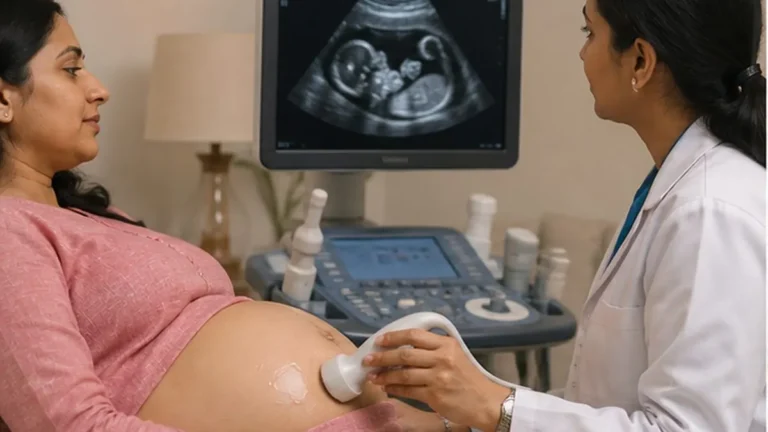

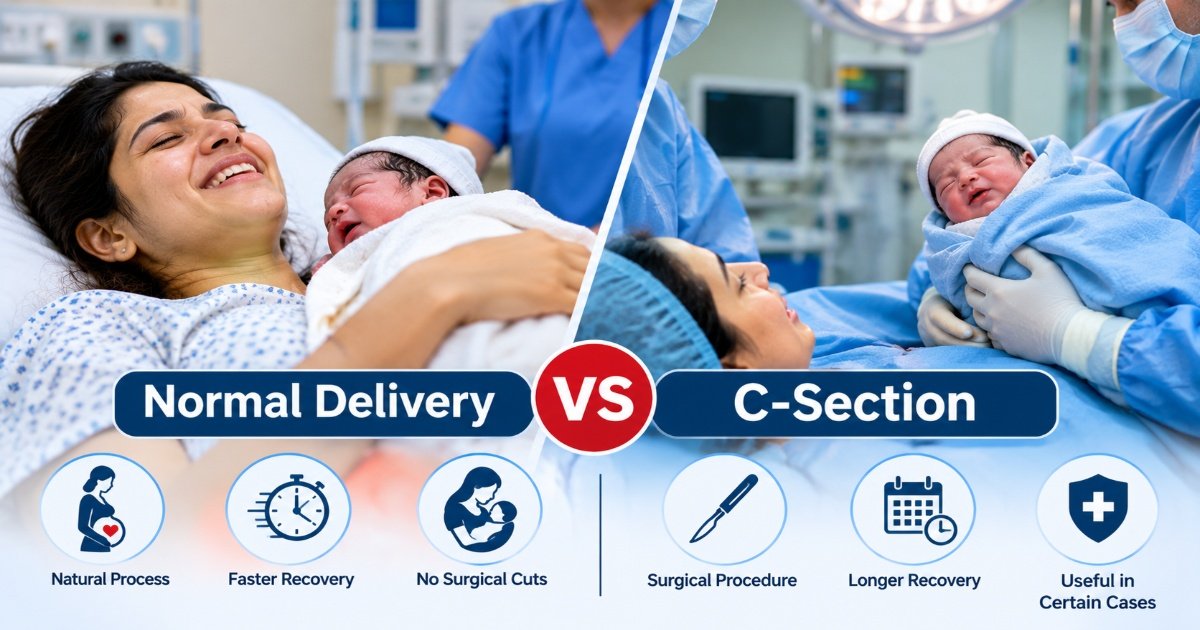
As the due date approaches, many expecting mothers begin thinking about one important question: Should I have a normal delivery or a C-section?
Both delivery methods are commonly used in modern maternity care, but they are different in terms of procedure, recovery and medical considerations. Some mothers may have an uncomplicated vaginal birth, while others may require a caesarean section to protect their health or their baby’s wellbeing.
Understanding Normal Delivery vs C-Section can help expecting mothers prepare for childbirth, discuss their concerns with their gynaecologist and make informed decisions during pregnancy.
However, there is no single delivery method that is best for every woman. The safest approach depends on the mother’s health, the baby’s position, pregnancy complications and how labour progresses.
At SR Hospital & Maternity Care, expecting mothers can discuss pregnancy progress, birth planning and delivery options with the maternity team in Khora Colony, near Noida Sector 62, Ghaziabad.
1What Is Normal Delivery?
Normal delivery, medically called vaginal birth, is when a baby is born through the mother’s vagina after labour begins and the cervix opens sufficiently.
In many uncomplicated pregnancies, vaginal birth is a suitable delivery option. The process usually involves contractions, cervical dilation, the baby’s movement through the birth canal and delivery of the placenta.
Benefits of normal delivery
- Generally faster recovery: Mothers often return to routine activities sooner than after abdominal surgery.
- Shorter hospital stay: If mother and baby are healthy, discharge may be possible within a day or two, depending on hospital protocol.
- No abdominal surgical incision: Vaginal delivery does not involve an operation on the abdomen and uterus.
- Earlier mobility: Many mothers can start walking within a few hours, depending on their condition.
- Future pregnancy considerations: There is no uterine C-section scar from that delivery.
Possible challenges of normal delivery
Normal delivery is not always free from complications. Some mothers may experience:
- Labour pain and exhaustion.
- Vaginal or perineal tears.
- Stitches after delivery.
- Pelvic floor discomfort.
- The need for assisted delivery using forceps or vacuum in selected cases.
- An emergency C-section if labour becomes unsafe.
The doctor and maternity team monitor labour and the baby’s condition to identify concerns early.
What Is a C-Section Delivery?
A caesarean section, commonly called a C-section, is a surgical procedure in which the doctor delivers the baby through incisions made in the mother’s abdomen and uterus.
A C-section may be planned before labour or performed as an emergency when vaginal delivery is not considered the safest option.
When might a C-section be recommended?
A gynaecologist may recommend a caesarean delivery in situations such as:
- Baby in breech or transverse position: The baby is positioned bottom-first or sideways, making vaginal delivery unsuitable in some circumstances.
- Placenta previa: The placenta covers the cervix, which can make vaginal birth dangerous.
- Fetal distress: Monitoring suggests the baby may not be receiving enough oxygen or needs to be delivered promptly.
- Labour not progressing: The cervix may not open sufficiently or the baby may not move down despite appropriate labour management.
- Certain previous uterine surgeries: A previous C-section or other uterine operation may influence the safest delivery plan.
- Certain maternal health conditions: Some cases of severe pre-eclampsia, pregnancy complications or other medical conditions may require caesarean delivery.
Not every mother with diabetes, high blood pressure, twins or a previous C-section automatically needs surgery. The decision depends on individual clinical findings.
Benefits of a medically indicated C-section
- Can provide a safer route of delivery when vaginal birth carries significant risks.
- Allows planned delivery in certain pregnancy complications.
- Can help deliver the baby promptly in some emergencies.
- Avoids labour-related vaginal and perineal tears.
Possible risks of C-section
Since it is an operation, a C-section has potential complications, including:
- Wound or uterine infection.
- Bleeding and, occasionally, blood transfusion.
- Blood clots.
- Pain and discomfort around the incision.
- Longer physical recovery.
- Scar-related complications in future pregnancies, including certain placental problems.
A C-section is a valuable and sometimes lifesaving procedure when medically needed. It should not be viewed as a failure of normal childbirth.
Normal Delivery vs C-Section: Key Differences
The following comparison helps expecting mothers understand the main differences.
| Comparison | Normal Delivery | C-Section |
| Delivery method | Baby is born through the birth canal | Baby is delivered through abdominal and uterine incisions |
| Procedure | Labour and vaginal birth | Surgical operation |
| Anaesthesia | Pain-relief options may be available | Usually spinal or epidural anaesthesia for planned surgery |
| Labour pain | Usually involves contractions and pushing | Planned surgery avoids labour, but surgical recovery involves pain |
| Recovery | Generally faster if uncomplicated | Usually takes longer because of surgery |
| Hospital stay | Often shorter | Often longer, depending on recovery |
| Surgical incision | No abdominal incision | Abdominal and uterine incisions |
| Possible complications | Tears, assisted birth or emergency C-section | Infection, bleeding, clots and surgical complications |
| Future pregnancy | No C-section uterine scar from this birth | Scar may affect planning and risks in future pregnancies |
Important: These are general comparisons. Actual recovery and hospital stay depend on the mother’s health, the baby’s condition and whether complications occur.
Which Delivery Is Safer for the Mother and Baby?
This is one of the most common questions during pregnancy.
The answer depends on the medical situation.
For a healthy pregnancy without complications, vaginal delivery is often an appropriate option. It generally avoids abdominal surgery and is associated with a shorter recovery.
However, when a medical complication makes vaginal birth unsafe, a C-section may be the safer choice for the mother, the baby or both.
For example, if the baby is showing signs of distress or the placenta is blocking the birth canal, delaying a medically necessary C-section can increase risks.
The goal should never be to achieve a particular type of delivery at any cost. The priority is a safe birth and appropriate care for both mother and baby.
How Long Does Recovery Take After Normal Delivery and C-Section?
Recovery varies from one woman to another. Factors such as pregnancy health, blood loss, sleep, nutrition, stitches and other complications can influence healing.
Recovery after normal delivery
Many mothers can begin gentle walking within hours after an uncomplicated vaginal birth.
During recovery, mothers may experience:
- Vaginal bleeding for several weeks.
- Perineal soreness or stitches.
- Mild abdominal cramps.
- Breast tenderness as milk production begins.
- Fatigue and changes in sleep.
Most mothers gradually resume everyday activities as their comfort improves and their doctor advises.
Recovery after C-section
C-section recovery usually takes longer because the abdomen and uterus need time to heal.
Common recovery experiences include:
- Pain around the surgical incision.
- Difficulty getting up or changing positions initially.
- Temporary limitations on lifting and strenuous activity.
- Need for wound care and follow-up.
- Gradual return to normal activities over several weeks.
Gentle movement is usually encouraged as advised by the medical team because it can help reduce the risk of blood clots.
Do not lift heavy objects, drive or restart strenuous exercise until your doctor confirms it is safe.
Can You Have a Normal Delivery After a Previous C-Section?
Yes, some women can have a vaginal birth after a previous C-section. This is known as Vaginal Birth After Caesarean (VBAC).
However, VBAC is not suitable for every woman.
The gynaecologist may review:
- The reason for the previous C-section.
- The type of uterine incision used.
- The number of previous C-sections.
- The time since the previous delivery.
- Current pregnancy complications.
- Baby’s position and estimated size.
- Availability of emergency surgical support.
Some women may be suitable for a trial of labour after caesarean, while others may be advised to have a planned repeat C-section.
This decision should be made with an obstetrician after reviewing the previous delivery records and current pregnancy.
How Can Expecting Mothers Prepare for a Safe Delivery?
Preparation during pregnancy can help mothers feel more confident and understand what to expect.
Attend regular antenatal check-ups
Routine pregnancy visits help monitor blood pressure, weight, baby’s growth and overall maternal health. They also allow doctors to identify complications early.
Follow a balanced diet
Include nutritious foods such as vegetables, fruits, pulses, whole grains, dairy products and suitable protein sources. Take iron, calcium and other supplements only as advised by your doctor.
Stay physically active when permitted
Gentle walking, pregnancy exercises and suitable stretching may help maintain fitness. However, activity should be adjusted according to pregnancy health and medical advice.
Discuss pain-relief options
Fear of labour pain is common. Ask your gynaecologist about available pain-management methods, including breathing techniques, supportive positions and medical pain relief where available.
Understand warning signs
Seek immediate medical assessment if you experience:
- Vaginal bleeding.
- Leakage or sudden gush of fluid.
- Reduced or absent baby movements.
- Severe headache or blurred vision.
- Sudden swelling of the face or hands.
- Severe abdominal pain.
- Regular painful contractions before 37 weeks.
Do not wait for your next scheduled appointment if these symptoms occur.
Common Myths About Normal Delivery and C-Section
Myth 1: Every woman should have a normal delivery.
Fact: Many women can have vaginal births, but some need a C-section for medical reasons. The safest option depends on individual circumstances.
Myth 2: C-section is always dangerous.
Fact: A C-section is a commonly performed and generally safe operation when medically appropriate. Like every surgery, it carries risks that should be discussed with the doctor.
Myth 3: A previous C-section means normal delivery is impossible.
Fact: Some women may be eligible for VBAC after individual assessment.
Myth 4: A normal delivery means there will be no pain after childbirth.
Fact: Vaginal delivery may involve soreness, tears, stitches and postpartum cramps. Recovery experiences vary.
Myth 5: The doctor can guarantee a normal delivery during pregnancy.
Fact: Labour is unpredictable. A birth plan may change if the health of the mother or baby requires a different approach.
Pregnancy and Delivery Care Near Khora Colony and Noida Sector 62
Choosing a maternity hospital is an important part of pregnancy planning. Expecting mothers should consider the availability of obstetricians, labour support, emergency surgical care, newborn assessment and postnatal guidance.
SR Hospital & Maternity Care, located in Khora Colony near Noida Sector 62, Ghaziabad, provides maternity consultation and support for normal and caesarean delivery.
Expecting mothers can discuss:
- Regular antenatal check-ups.
- Pregnancy monitoring and delivery planning.
- Normal delivery support.
- Planned and emergency C-section care.
- High-risk pregnancy assessment.
- Newborn examination and postnatal support.
- Breastfeeding and recovery guidance.
The appropriate delivery method is determined by the obstetrician after assessing the mother and baby’s condition.
Planning your delivery? Consult the maternity team at SR Hospital & Maternity Care to understand your pregnancy progress, discuss delivery options and prepare for childbirth.
Frequently Asked Questions (FAQs)
1. Which is better, normal delivery or C-section?
Neither is universally better. Vaginal delivery is often suitable for uncomplicated pregnancies, while a C-section may be safer when medical complications make vaginal birth risky.
2. Is normal delivery recovery faster than C-section?
Generally, yes. Mothers often resume daily activities sooner after an uncomplicated vaginal birth. C-section recovery takes longer because the abdominal and uterine incisions need to heal.
3. Why do doctors recommend a C-section?
A C-section may be recommended due to placenta previa, certain abnormal baby positions, fetal distress, labour not progressing or other maternal and pregnancy-related complications.
4. Can a C-section be planned before labour starts?
Yes. A planned C-section may be recommended when a medical condition makes vaginal birth unsuitable or when a planned surgical delivery is considered the safest option.
5. Can I have a normal delivery after one C-section?
Some women can have a vaginal birth after a previous C-section. Eligibility depends on the previous uterine incision, pregnancy history, current condition and availability of emergency care.
6. Does a C-section affect future pregnancies?
A previous C-section can influence future pregnancy planning. It may increase the risk of certain placental complications and uterine scar-related problems. Discuss future pregnancy plans with your obstetrician.
7. Is breastfeeding possible after a C-section?
Yes. Breastfeeding can usually begin soon after a C-section when the mother and baby are medically stable. Nurses can help with comfortable feeding positions.
8. How many days does a mother stay in hospital after delivery?
Hospital stay depends on the type of delivery and recovery. Many mothers with uncomplicated vaginal births leave within one or two days, while C-section stays are often longer.
9. Can every pregnant woman have a normal delivery?
No. Many women are suitable for vaginal birth, but certain pregnancy complications or changes during labour may make a C-section necessary.
10. When should I discuss my delivery plan with my gynaecologist?
It is helpful to discuss delivery preferences during antenatal visits, especially in the second and third trimesters. Your doctor can review your pregnancy and explain possible delivery options.
Conclusion
Understanding the difference between normal delivery and C-section helps expecting mothers prepare for childbirth with greater confidence. Vaginal delivery often offers a shorter recovery, while caesarean delivery is an important surgical option when medical circumstances require it.
The right decision should be based on the health of the mother and baby, not pressure, fear or assumptions about one delivery method being superior.
Attend regular pregnancy check-ups, discuss your concerns openly and follow your obstetrician’s advice. A safe delivery and healthy mother and baby should always remain the priority.
For pregnancy consultation and delivery planning near Khora Colony and Noida Sector 62, contact SR Hospital & Maternity Care.
This article is for general health awareness and does not replace a consultation with a qualified doctor. In an emergency, call 85888 26726 or go to the nearest emergency department.