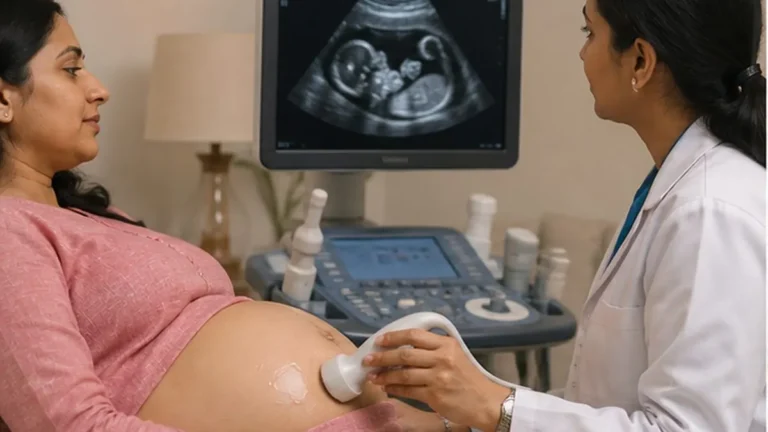



Pregnancy is an important journey, and monitoring a baby’s health is an essential part of antenatal care. One of the key things doctors may check during pregnancy is the baby’s heart rate. Fetal heart rate monitoring helps healthcare professionals assess the baby’s heartbeat and, in certain situations, understand how the baby responds to movements or uterine contractions.
Many expecting parents have questions such as: Is my baby’s heartbeat normal? What is an NST test? Why does a doctor recommend a CTG test during pregnancy? Understanding these tests can help you feel more confident about your pregnancy checkups.
If you are looking for pregnancy monitoring or maternity care in Ghaziabad, here is what you should know about fetal heart monitoring and the technology used.
What Is Fetal Heart Rate Monitoring During Pregnancy?
Fetal heart rate monitoring is a method used to check and record the baby’s heartbeat while the baby is in the uterus. Depending on the stage of pregnancy and the medical reason, doctors may use different monitoring methods.
The baby’s heart rate provides useful information about their condition. However, one heartbeat reading alone cannot confirm that everything is normal. Doctors interpret the result along with pregnancy history, fetal movements, gestational age and other clinical findings.
Fetal heart monitoring may be recommended during:
- Routine assessment when clinically indicated
- High-risk pregnancy care
- Monitoring after a mother reports reduced fetal movements
- Assessment during labour
- Situations where the doctor wants to evaluate the baby’s response to uterine contractions
How Do Modern Foetal Monitoring Machines Work?
A fetal monitoring machine can record the baby’s heart rate and, in some cases, uterine contractions. A commonly used method is electronic fetal monitoring, which may involve placing sensors on the mother’s abdomen.
The machine generally uses two sensors during a CTG recording:
1. Ultrasound transducer: This sensor detects the baby’s heartbeat and records changes in the fetal heart rate.
2. Contraction sensor: This sensor records the timing and pattern of uterine contractions.
The information is displayed on a monitor and may also be printed as a graph. A doctor or trained healthcare professional reviews the recording and interprets it in the context of the pregnancy.
The monitoring process is generally non-invasive. The exact method and duration depend on the reason for the test.
What Is an NST Test During Pregnancy?
An NST, or Non-Stress Test, is a type of fetal heart rate monitoring used to observe how the baby’s heartbeat changes with movement.
During the test, sensors are placed on the mother’s abdomen to record the baby’s heart rate. The healthcare professional may ask the mother to notice or indicate when she feels the baby move.
A reassuring NST result generally shows appropriate changes in the baby’s heart rate in response to movement. If the result is not reassuring, it does not automatically mean that the baby is in danger. The doctor may recommend further assessment or repeat monitoring.
An NST is commonly considered in the later stages of pregnancy when there is a medical reason to assess the baby’s well-being.
What Is a CTG Test During Pregnancy?
CTG stands for Cardiotocography. It is a monitoring method that records the baby’s heart rate along with uterine contractions.
Doctors may recommend CTG monitoring:
- During labour to assess the baby’s heart rate pattern
- When there are concerns about fetal well-being
- In selected high-risk pregnancies
- When monitoring is needed after certain pregnancy complications
CTG helps doctors assess patterns over time rather than relying on a single heartbeat reading.
NST vs CTG: What Is the Difference?
Although both tests involve fetal heart rate monitoring, their purpose and use can differ.
| Feature | NST Test | CTG Test |
| Full form | Non-Stress Test | Cardiotocography |
| Main purpose | Observes heart rate changes with fetal movement | Records fetal heart rate and uterine contractions |
| Common use | Assessment before labour when indicated | Assessment during pregnancy or labour |
| Monitoring | Baby’s heart rate | Baby’s heart rate and contractions |
An NST is often performed using electronic fetal monitoring equipment. A CTG recording can also be used for an NST. Your doctor will decide which monitoring approach is appropriate.
When Do Doctors Recommend Fetal Heart Monitoring?
Fetal heart monitoring is not necessarily required at every routine pregnancy visit. Doctors recommend it according to the mother’s health, pregnancy history and the baby’s condition.
It may be advised in situations such as:
1. High-risk pregnancy: Certain maternal health conditions or pregnancy complications may require closer monitoring.
2. Reduced fetal movements: If you notice that your baby’s movements have reduced or changed, contact your maternity care provider promptly. Do not wait for a routine appointment.
3. Pregnancy beyond the expected due date: Your doctor may recommend additional monitoring depending on your pregnancy and clinical assessment.
4. Maternal medical conditions: Conditions such as high blood pressure or diabetes may influence the monitoring plan.
5. Concerns during labour: Continuous or intermittent fetal heart rate monitoring may be used depending on the clinical situation.
What Happens During a Fetal Heart Monitoring Test?
The procedure is generally straightforward:
- The mother is made comfortable, usually in a sitting or semi-reclined position.
- Sensors are placed on the abdomen using straps.
- The machine records the baby’s heartbeat and, when required, uterine activity.
- The recording is reviewed by the healthcare professional.
- The doctor explains the findings and decides whether any further assessment is needed.
The duration of monitoring varies. Sometimes the recording may take longer if the baby is sleeping or if the initial result needs further assessment.
What Is a Normal Baby Heart Rate During Pregnancy?
A commonly used reference range for the baseline fetal heart rate in the third trimester and during labour is approximately 110–160 beats per minute.
However, fetal heart rate changes with gestational age, fetal activity and other factors. Doctors do not judge the baby’s health using only one number. They also assess the pattern, variability, accelerations, decelerations and the overall clinical situation.
If your doctor recommends additional monitoring, it does not automatically mean there is a serious problem. It may simply be a precaution to gather more information.
Why Is Timely Pregnancy Monitoring Important?
Regular antenatal checkups help doctors follow the mother’s health and the baby’s development. When indicated, fetal heart rate monitoring provides additional information about the baby’s condition.
It can help healthcare professionals:
- Observe fetal heart rate patterns
- Assess the baby’s response to movement or contractions
- Identify patterns that may need further evaluation
- Decide whether additional tests or closer observation are needed
- Support clinical decisions during labour
Monitoring is one part of pregnancy care. It does not replace ultrasound scans, blood tests, physical examinations or other recommended antenatal assessments.
When Should You Contact Your Doctor Immediately?
Contact your maternity care provider promptly if you experience:
- Reduced or absent baby movements
- Vaginal bleeding
- Leakage of fluid
- Severe or persistent abdominal pain
- Severe headache, vision changes or sudden swelling
- Regular painful contractions before your expected due date
Seek emergency medical attention for severe symptoms. Do not rely on a home Doppler or a single heartbeat reading to decide whether your baby is safe.
Pregnancy Monitoring and Maternity Care in Ghaziabad
Expecting parents looking for maternity care in Ghaziabad should choose a healthcare provider who can assess their pregnancy needs, explain recommended tests and guide them through antenatal checkups.
At SR Hospital & Maternity Centre, Ghaziabad, expecting mothers can enquire about maternity consultations, pregnancy assessments and the appropriate monitoring recommended by their doctor.
If you live in Khora Colony, Prem Vihar, Indirapuram or around Noida Sector 62, discuss your pregnancy monitoring needs with a qualified maternity-care professional.
Always confirm the availability of a particular test or monitoring facility with the hospital before visiting.
Frequently Asked Questions (FAQs)
1. What is fetal heart rate monitoring during pregnancy?
It is a method used to record the baby’s heartbeat and assess its pattern. Doctors may recommend it during pregnancy or labour when clinically required.
2. What is an NST test in pregnancy?
An NST, or Non-Stress Test, observes how the baby’s heart rate changes with movement. It is used to assess fetal well-being when recommended by a doctor.
3. Is a CTG test safe during pregnancy?
CTG is a non-invasive external monitoring method commonly used when indicated. Your doctor will decide whether it is suitable for your pregnancy.
4. What is the normal fetal heart rate?
A commonly used baseline reference range in late pregnancy and labour is around 110–160 beats per minute. The full heart rate pattern and clinical situation matter when interpreting a result.
5. When is an NST test recommended?
It may be recommended in selected high-risk pregnancies, after concerns about reduced fetal movements or when the doctor wants to assess the baby’s well-being.
6. Does every pregnant woman need a CTG test?
No. Fetal monitoring is recommended according to individual medical needs. It is not required at every routine pregnancy checkup.
7. Where can I enquire about pregnancy monitoring in Ghaziabad?
You can contact SR Hospital & Maternity Centre in Khora Colony, Ghaziabad, to enquire about maternity consultations and the availability of relevant pregnancy monitoring services.
Consult for Maternity Care at SR Hospital & Maternity Centre
Pregnancy care involves regular checkups, timely medical advice and appropriate monitoring when needed. If you have questions about your baby’s heartbeat, NST or CTG testing, consult a qualified maternity-care professional.
This article is for general health awareness and does not replace a consultation with a qualified doctor. In an emergency, call 85888 26726 or go to the nearest emergency department.